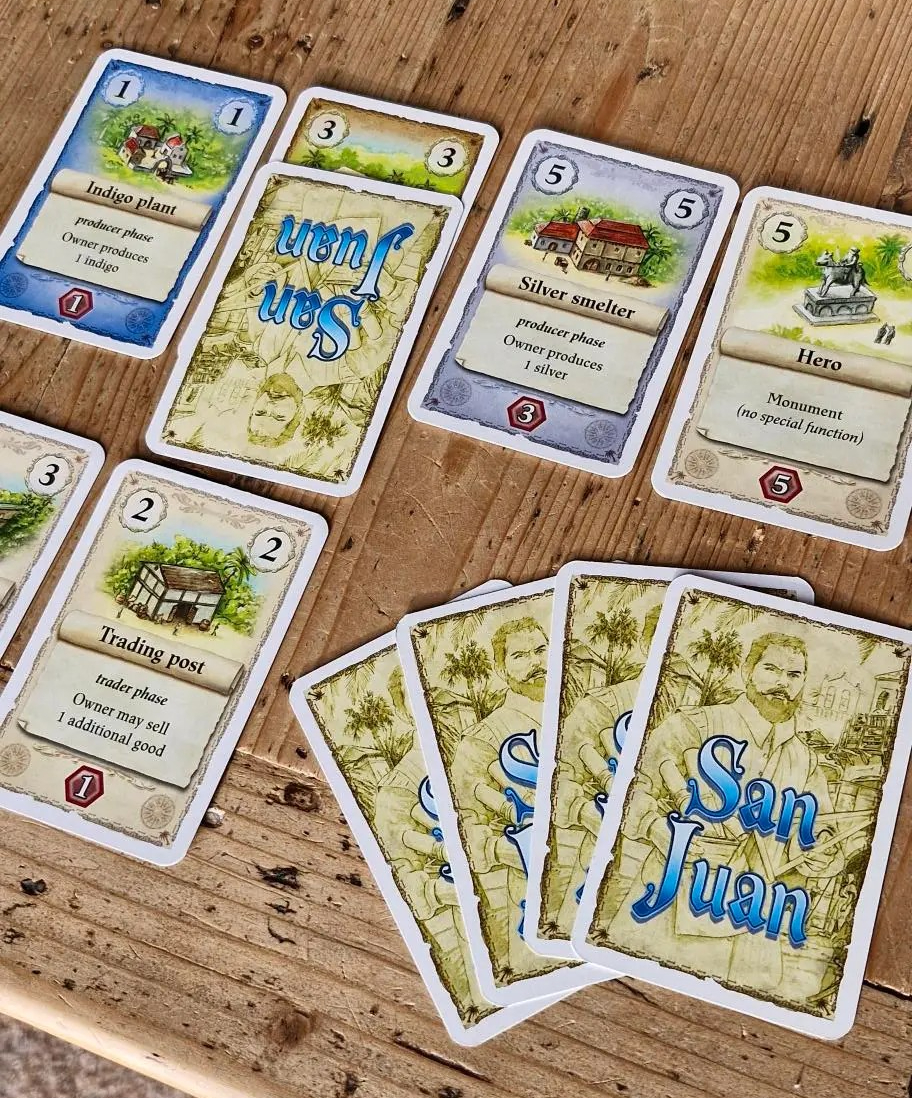
Some things have elements that aren’t terribly inspiring when described but seem to sing when consumed, an example of this is the television series Detectorists. After it being described and quietly recommended by a few people I decided one evening to give it a go. The pacing was steady, the dialogue and humour perfectly enjoyable, the characters had enough depth and soul without trying to dominate the screen and the storylines had just enough bite to keep you coming back. It just worked in such a pleasing way and didn’t try to push too hard in any particular direction and sometimes in the right situation this is just what you need.
So how does this tie into a card game called San Juan? Well there are games that just seem to sit quietly in a gamers arsenal and are really useful to break out in the right situation. San Juan is one of those games, it’s a pleasant treat, it’s immediately pleasing, it’s uncomplicated enough to be accessible to most but also thinky enough to bring the chin stroke out of almost everyone. It has a quick set up and short teach, for the general flow of the game that is and it plays in that 30-40 minute sweet spot. It isn’t however the sort of game that reshapes a genre, much like Detectorists didn’t revolutionise alternative comedy, it just served as satisfying portion to be enjoyed among a familiar genre.
The game itself emerged back in 2004 as a trimmed down card based version of the heavier Puerto Rico, both by designer Andreas Seyfarth. Thematicly players are developing the city of San Juan by playing cards that represent buildings and apparently San Juan in complete when one player has constructed twelve buildings. Played building cards are placed in front of each player in what we refer to in the hobby as a tableau, a fancy term for placing cards on the table in front of you. Placed buildings will score points at the end of the game and as one would expect the player with the most points wins the game.
Apart from a few character and goods value tokens (more on those later) the game is basically a big deck of cards, 110 cards in actual fact. Within these cards are quite a variety of buildings that are essentially split into two types – production and city buildings. Production buildings as the name suggests produce goods which you can then sell, with the city buildings, of which there are around twenty different types, granting you various abilities or bonuses that enhance certain actions or provide extra ways to score points at game end.
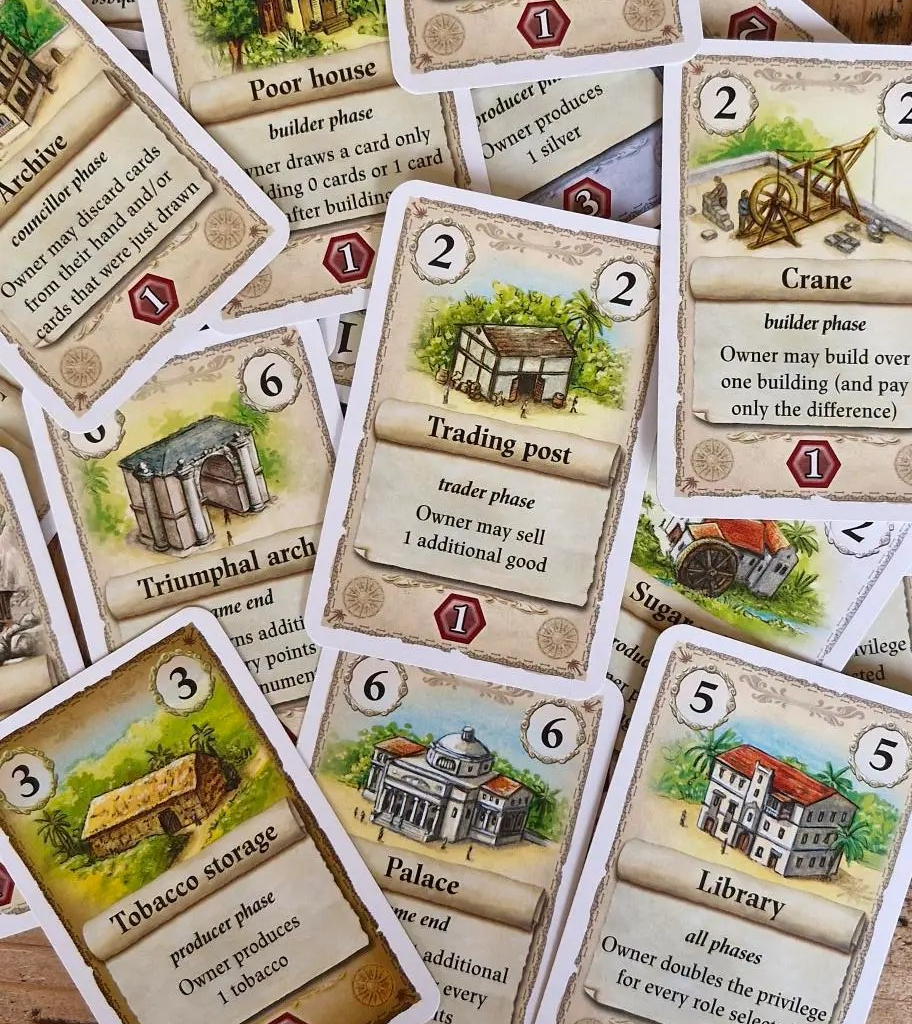
With the tableau aspect of this game there’s no placement restrictions for the buildings you place in front of you, they can go in any order, however that’s not to say that you should just chuck any old buildings down in any order as different buildings will provide abilities that if combined in an effective way will enhance your game and chances of winning. Also some buildings will be best utilised if placed early in proceedings whereas others will be best utilised late on, there’s little point playing a building that boosts your productivity as your last card triggering the game end as you want to be utilising that ability throughout the game. So there’s certainly some consideration as to the point in the game you will want to construct certain buildings.
You might be wondering how the game keeps track of things like produced goods if the game contents are just some character tokens and a load of cards? Well in a similar fashion to other tableau style games like Race for the Galaxy or Port Royale the cards are actually multi purpose. Obviously the standard function is as a building when played in front of a player, however they represent produced goods when placed face down on production buildings and also form the currency of the game. Each building has a construction cost which is simply fulfilled by discarding however many cards from your hand that cost may be, so there’s a big element of hand management here, don’t go discarding cards from your hand that you want to hold onto and actually build later on.
Let’s go back to the character tokens we briefly mentioned earlier by looking at round structure, which revolves around each player in turn choosing one of the displayed characters and carrying out its ability. Then after each person has chosen a role the character tokens are reset and a new round begins with the first player token or Governor token as its known moving around, typical game structure for initiated gamers. Interestingly choosing a particular role doesn’t actually deprive other players from carrying out that action, as each player actually gets to do every chosen role, the benefit of a player choosing a particular role themself is that they get to do a slightly enhanced version of it referred to as the privilege.
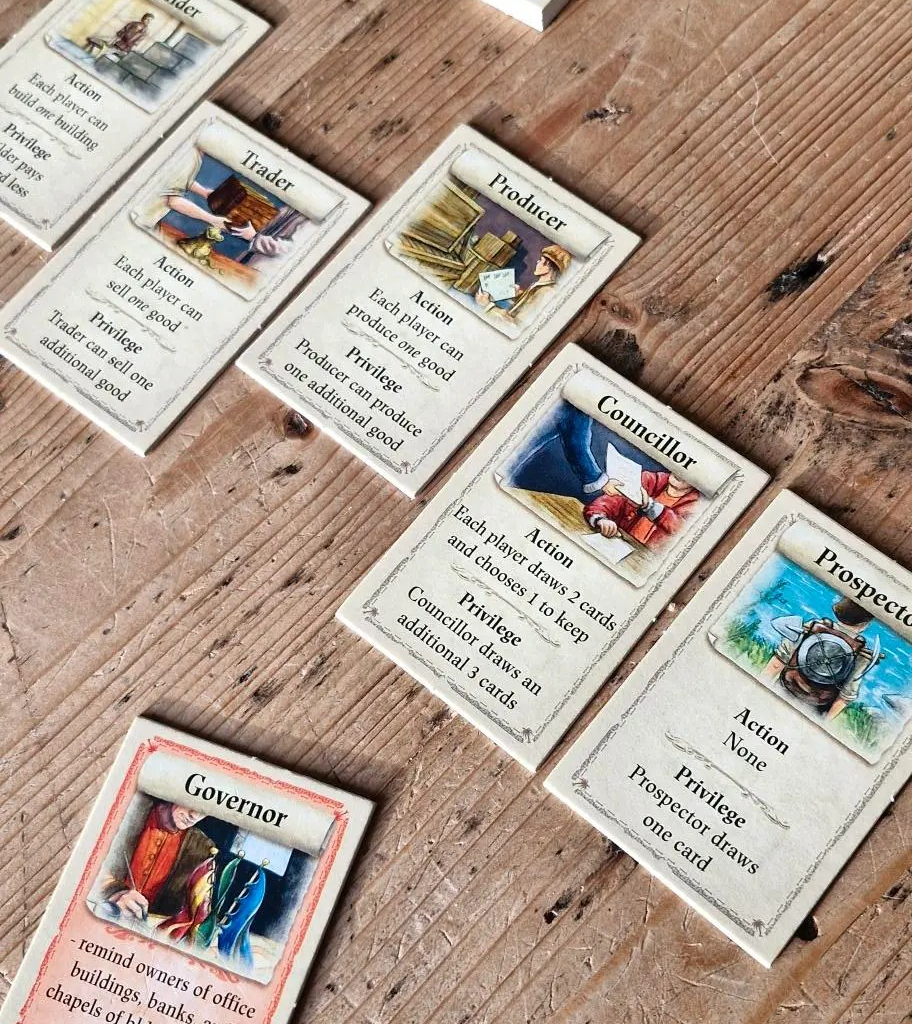
So more about those roles in detail, which aren’t terribly out there or special, they do sort of what you expect in a game of this type. There’s a builder that you guessed it allows you to build, which simply means place a card into your tableau. Then there’s the producer which allows you to produce goods on your production buildings and a trader that then lets you sell those goods. Selling goods in this game simply allows you to draw more cards into your hand, the number being dependant on the value of said goods when sold, which alters throughout the game by circulating through a series of value tokens. Finally the Councillor and Prospector allow players to draw more cards, although the latter only allows the player who chose it to draw, basically it’s the selfish role and anyone who picks it should be told as much!
The lovely thing about these roles being so basic is that players choose them rapidly, there’s no big deliberation over the choice, it’s generally clear what you need to do and this keeps the game flowing. In any given round players will have the opportunity to do pretty much everything, it’s just that certain players will get to do them with a privilege bonus. There might be an argument that this slightly dilutes the experience if the choice is almost made for you and some players could well prefer to have a slightly more chewy decision to make. In which case you would probably be in the realms of Race for the Galaxy, but I really think you’d be picking either of these games for two very different types of game session.
One aspect which might cause not a problem as such but is an issue that card heavy games can encounter, is that first time players will immediately be hit with an array of cards that they aren’t familiar with and will then need to read and understand them as they appear. It’s not really worth trying to go through every variation of card during the teach as players wont remember. Thankfully with San Juan the cards never really have abilities that require much in the way of interpretation or learning and if people feel that they were at a disadvantage not knowing the cards then damn it just play another game of San Juan straight after!
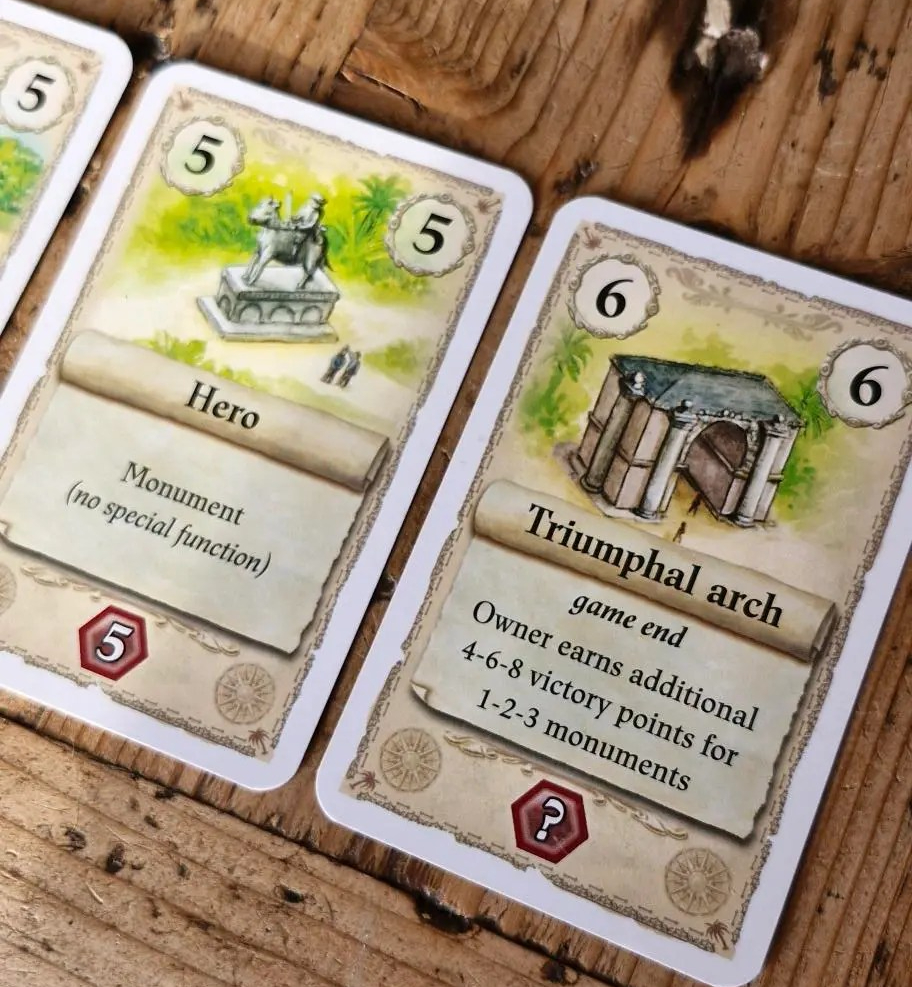
Most collections should have space for a game like San Juan, it serves a purpose for seasoned gamers and new gamers alike, quite a gateway game for the latter offering a simple pleasing system to engage with. If we were going to raise something to consider it could be said that the game perhaps lacks some drama or humour. During our time with the game there hasn’t really been any moments where someone has taken an action that turned a game on its’ head and made people comment on a clever play, or caused a reaction that drew laughter or ‘ooohs’ as someone else has their plans scuppered. It’s all quite safe territory which isn’t meant to make this game sound dull, it’s just something to consider if your group like games with a little edge to them.
That said San Juan certainly gets a thumbs up. Sadly out of print now but there are definitely second hand copies around to be picked up. So maybe you could go on a little hunt to find and unearth this little treasure, a bit like a …. detectorist.
 Cardbaudit
Leave a comment