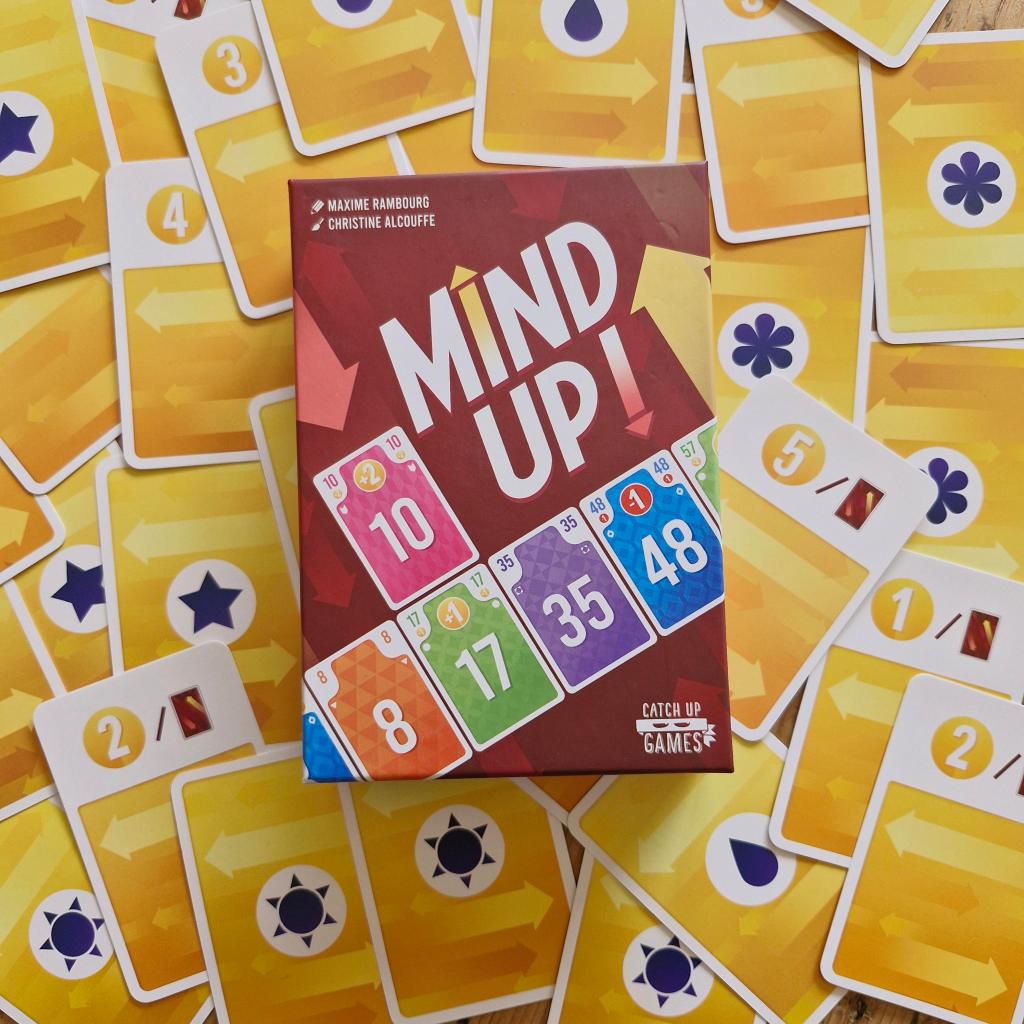
Mind Up sits in the themeless small box card game category, which sounds like a bit of an insult doesn’t it? Well it most certainly isn’t meant to be, as clever themeless card games can often be most enjoyable and a very useful weapon in the arsenal of a gamer. Certain themes can put people off who are perhaps not as thematically relaxed as others from sitting down to play a game that they might potentially otherwise enjoy. However there are no fantasy characters or secret agents here to threaten your reputation among others, just safe old numbers on cards. So fear not worried ones you’ll still be recognised as a cool grown up if you play this game.
Right so what do we have in the box? Well according to the very nicely written and designed instructions we get cards, 104 of them to be precise. These are broken into three groups, sixty main cards numbered from 1 to 60 divided into five different colours with twelve cards in each group. You then have thirty scoring cards, five for each player numbered 1 to 5, that’s right this game plays up to a hefty six people. Then finally fourteen bonus objectives which we’ll come to later.
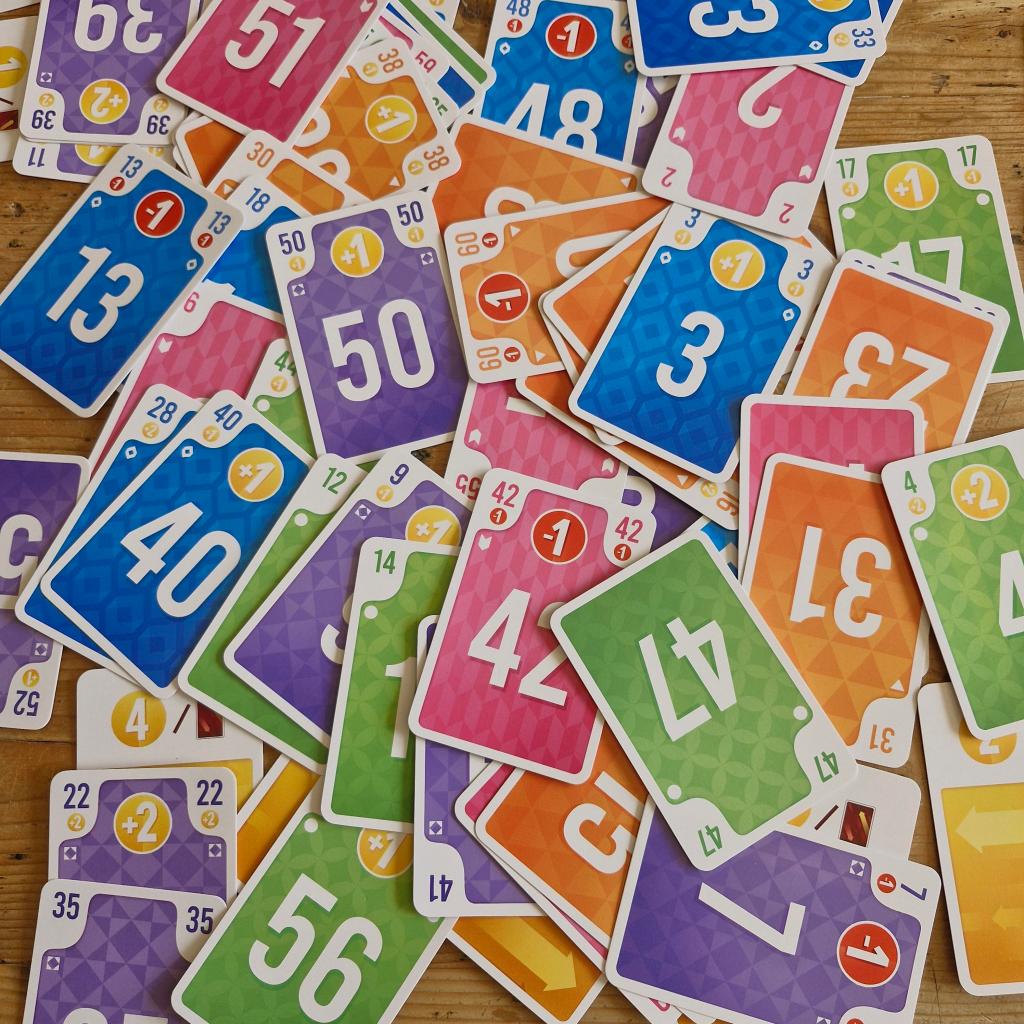
So now we’ve covered the games streamlined contents how do we play. Mind Up is a blind bidding almost set collection type situation. To start the game each player is given a set of scoring cards and seven random cards dealt from the main deck. One player shuffles their scoring cards and lays them out in front of them with everyone else copying whatever that order is with their own set of scoring cards. A number of cards matching the player count is drawn from the main deck and laid out in ascending numerical value in the middle of the table and you’re ready to begin.
In each turn of the game every player is going to simultaneously choose a card from their hand and place it face down in front of them, once everyone has chosen you all reveal. Then going through the selected cards from low to high each player takes the card from the centre of the table that matches their order replacing it with their bidding card. The taken card is then added on to one of the scoring cards and then the bidding process continues with players then bidding with another card from their hand for the cards now on the table. This continues until players have one card left in hand which is then added to the appropriate scoring card and then players calculate their score.
This pattern of bidding for cards continues for three rounds and as you would expect the player with the highest score at the end wins. There are however a few extra aspects which make this game very interesting to us, firstly the scoring card system. As mentioned the cards are numbered 1 to 5 but dealt shuffled so as an example everyone may end up with 3,5,1,2 and 4 in front of them. What this means is every card allocated to the first scoring card will be worth 3 points, cards added to the second scoring card 5 points each and so on. The interesting aspect here is the scoring cards have a set colour allocated to them based on the first card placed there, so the first card you take in any round is always put on the first scoring card and any cards taken that match colour also placed there. However, as soon as you take a second colour that is added to the second scoring place. So what you’ll be trying to do is maximise the placement of particular colours in particular places, which becomes a really lovely puzzle of trying to guess what bid card you need to play to take the correct colour from the middle of the table, with the kicker obviously being everyone is trying to do the same.
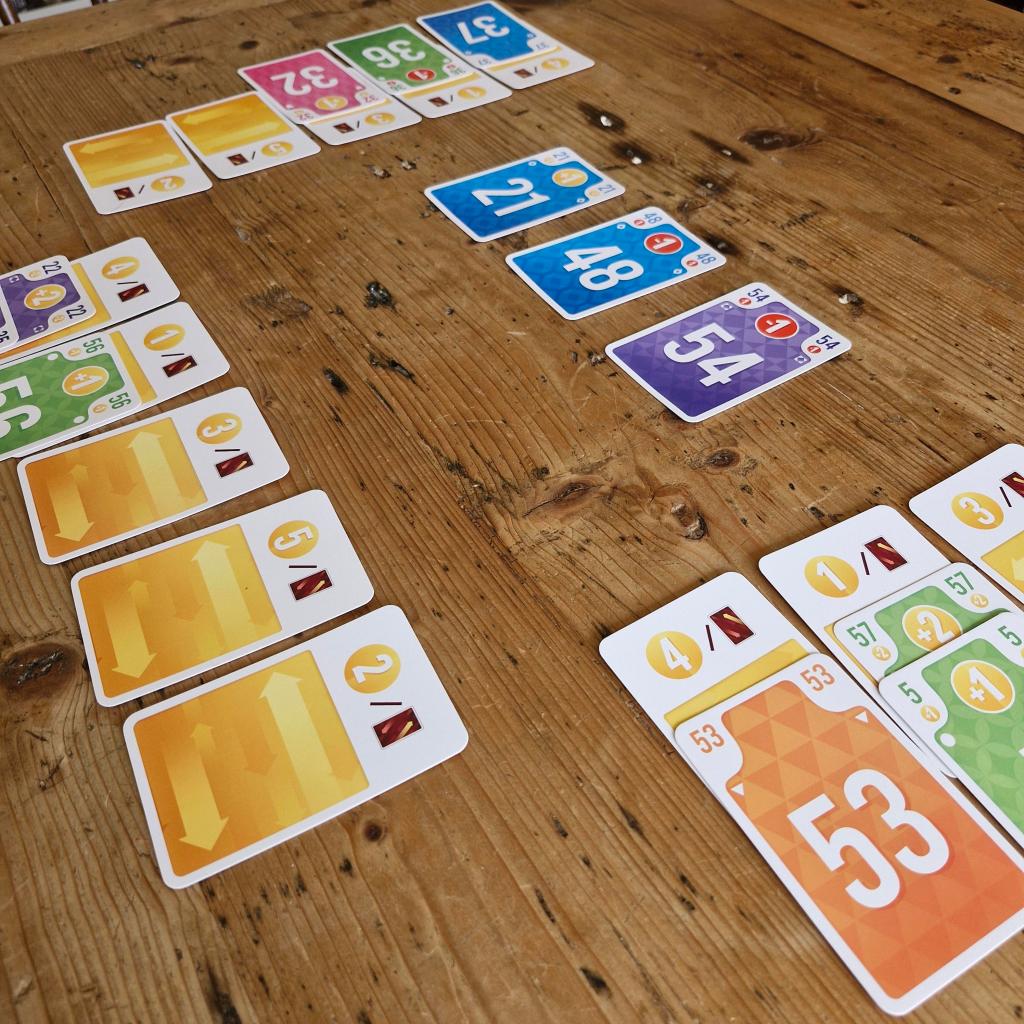
To add extra spice here the order of scoring cards is actually changed at the beginning of each round, so everyone may end up with their high scoring cards in the end places which mean you need to pick up a series of different colour cards to move over and be able to place cards in the better spots. It’s really very clever.
Another really interesting aspect is that at the end of each round after calculating your score you’re not dealt a fresh set of cards for the next round, oh no, the cards you get for the next round are ones you’ve placed on your scoring cards in the current round. In the second and third round you also get an extra card from the deck but essentially what we have here is an almost closed economy. By the half way stage you start to know which are the really high or low cards in circulation and also which colours are well represented. A lot of people might not even notice but for very observant players it can offer an advantage.
These elements make for a really very interesting nugget of a game. In several respects this really feels similar to the rather great 6Nimmt, which interestingly also comes with exactly 104 cards? Both games utilise the system whereby each turn is taken simultaneously with all players each selecting a card from their hands keeping it face down and then all revealing together, which obviously has a big element of luck but also a large degree of considered judgement. You can see where the others players will probably be placing their blind bid, you can’t be absolutely sure but judging it right is tense and a lovely feeling.
There’s something great about having a system whereby everyone is simultaneously selecting cards. Nobody feels any downtime as such, there’s the constant request for your attention and demand on your decisions, often requiring you to make snap decisions which can often be wrong but this just improves proceedings and makes things more chaotic.
We should look at replayability, which is decent as you’ll always get different card combinations but we’d say that most games will feel somewhat similar. By which I mean you won’t really play Mind Up wondering how different games will play out, you’ll know how the game will feel. This isn’t a bad thing as such as you’ll never get a poor game of Mind Up but I suppose there won’t be real standout games either. It’s dependable fun for most people although I’m sure the aspect of making judgement calls which in most cases will fall down to luck to some extent will mean some strategy purists bemoan the cards weren’t in their favour. However I would counter this and say there are elements of strategy to when you use certain cards, keeping very low numbers in hand to almost guarantee you take the first card on the table and keeping back the last card of the round to be placed in a particular column. It has just enough of both elements in my opinion.
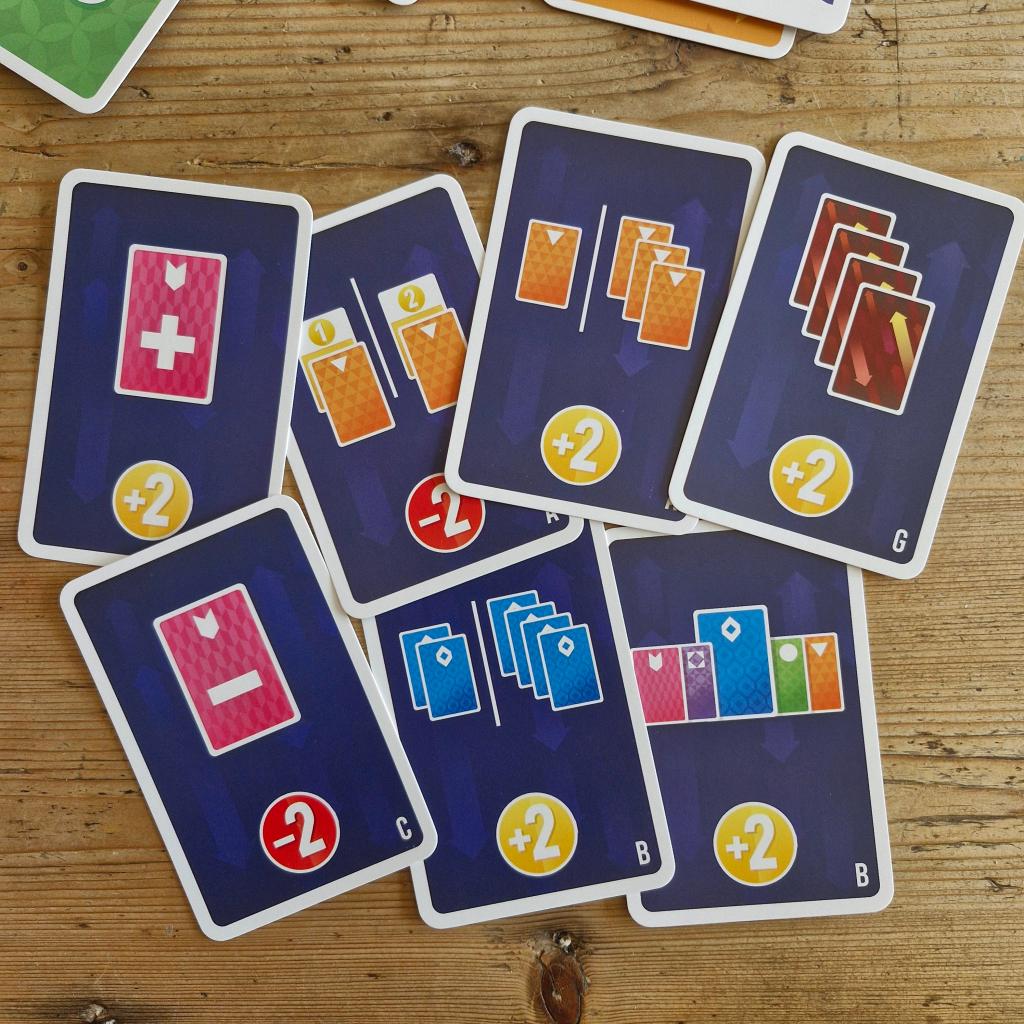
In terms of game time the box is spot on, Mind Up can easily be done in fifteen to twenty minutes with a very short teach. Our group has played this at three, four and five players and it was great at all counts. Coming back to the bonus objectives we mentioned earlier, we have to put our hands up and say we haven’t tried any of them yet as we’ve been perfectly happy with the standard game, however I’m sure we’ll get round to it. Reading about them in the rules it seems like they’d add just enough spice to bring some extra consideration without disrupting the main game.
This game goes right in the collection alongside other quick card game favourites like the already mentioned 6Nimmt but also other great games like No Thanks, Love Letter, Scout and Startups. So there we have it, hard to go wrong here, reliable fun, nicely produced and cheap to buy, it really didn’t take us long to make our Mind Up about this one!


 Cardbaudit
Leave a comment