-
The inescapable expansion
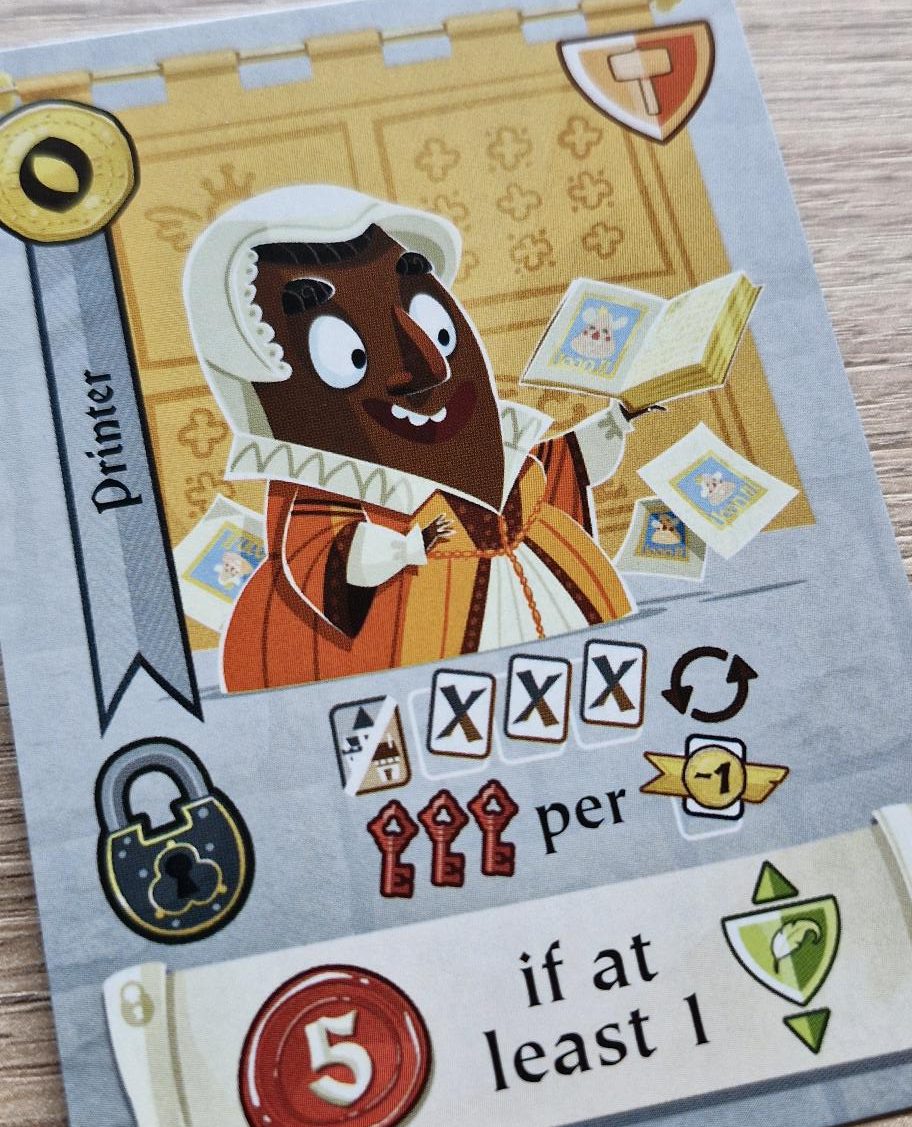
Part of Castle Combo’s beauty is that it fits a pleasing thinky puzzle into nine swift turns, wrapping up in around 15-20 minutes. After which players will deconstruct the easy going beginning, consideration filled middle and then the regret filled end game where you realise where you went wrong before deciding to have another game because everyone agrees it’s very good.
This sleek design means it’s very easy to fit a game of Castle Combo in to most sessions, twenty minutes before you need to wrap up, ‘quick game of Castle Combo?’ Sure! So news of an expansion did leave a few wondering if it would spoil that svelte experience. I am however pleased to report that this is the perfect expansion, small and non invasive, it shuffles right in and appears sparingly so there’s a nice ‘ooh’ moment when a new card appears.
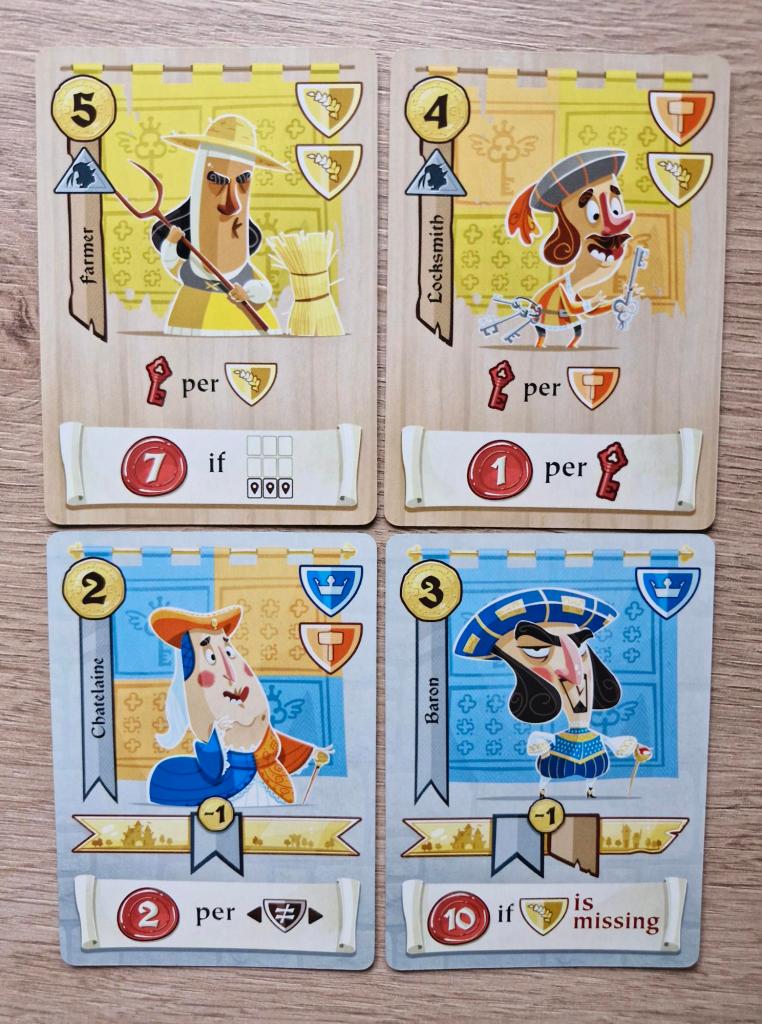
So what are these new cards and how do they change the game? The expansion contains twelve new cards, six for each deck, which function in very much the same way as the standard cards with different coloured shields and end game scoring criteria, which are slightly different here having the emphasis on the value of cards around it to define how many victory points it generates.
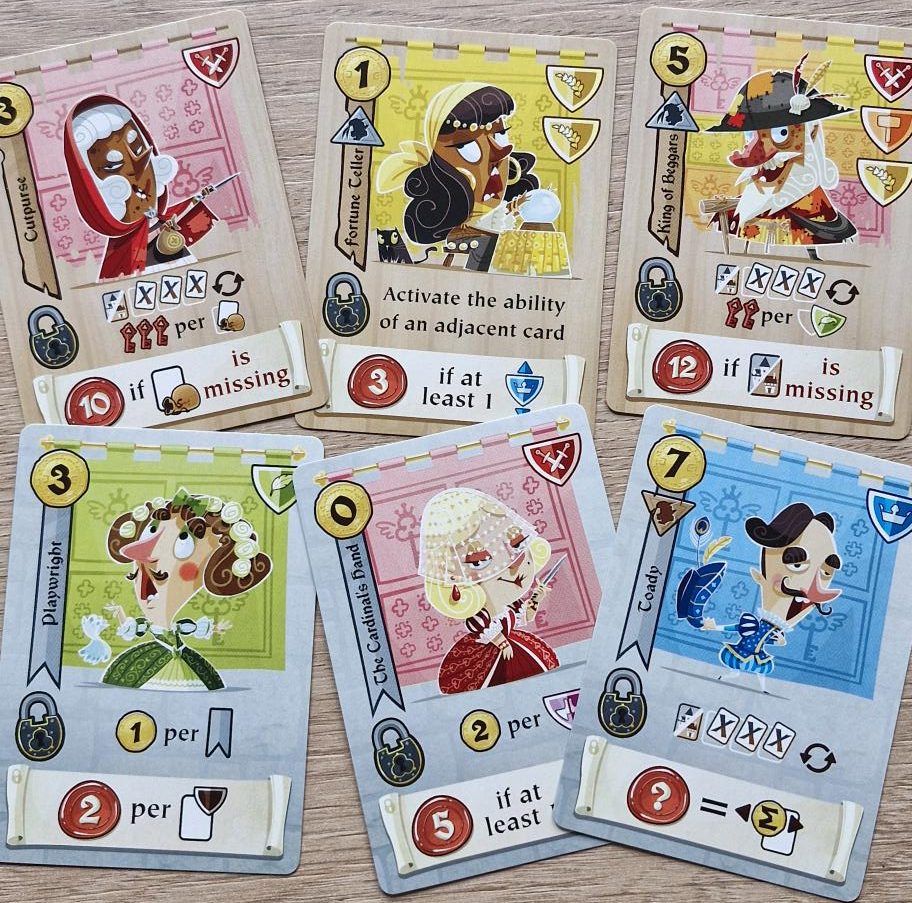
There is however one main difference, the space displaying the action which triggers when a card is purchased has a padlock next to it, meaning that the action is initially locked and can be triggered when desired on a future turn, as opposed to automatically activating when you place the card in your tableau.
This is a very slight difference but just adds another layer of consideration which if activated at the right time can spark lovely combos or get you out of a pickle. It really doesn’t upset the flow of the standard game and slots in perfectly. This isn’t one of the situations where you might sometimes decide to use the expansion and then in other instances take it out, once stirred into this medieval stew it’s staying there.
Overall this is a lovely little expansion that sprinkles a little bit of extra spice into an already great game. So the decision as to whether you as a Castle Combo fan should purchase this expansion, well much like a real life Oubliette it’s something you can’t really get out of.
-
Cartwheel in a phonebox
There are three games in my collection that evoke the same feeling, the one where what you decide to do on your turn really matters and if you make a poor decision you damn well feel it for the rest of the game. That’s not to say that in every other game your turn simply doesn’t matter, that would be ridiculous, what we’re saying is that in Pipeline, Calico and the game in question here Castle Combo, your turn decision REALLY matters.
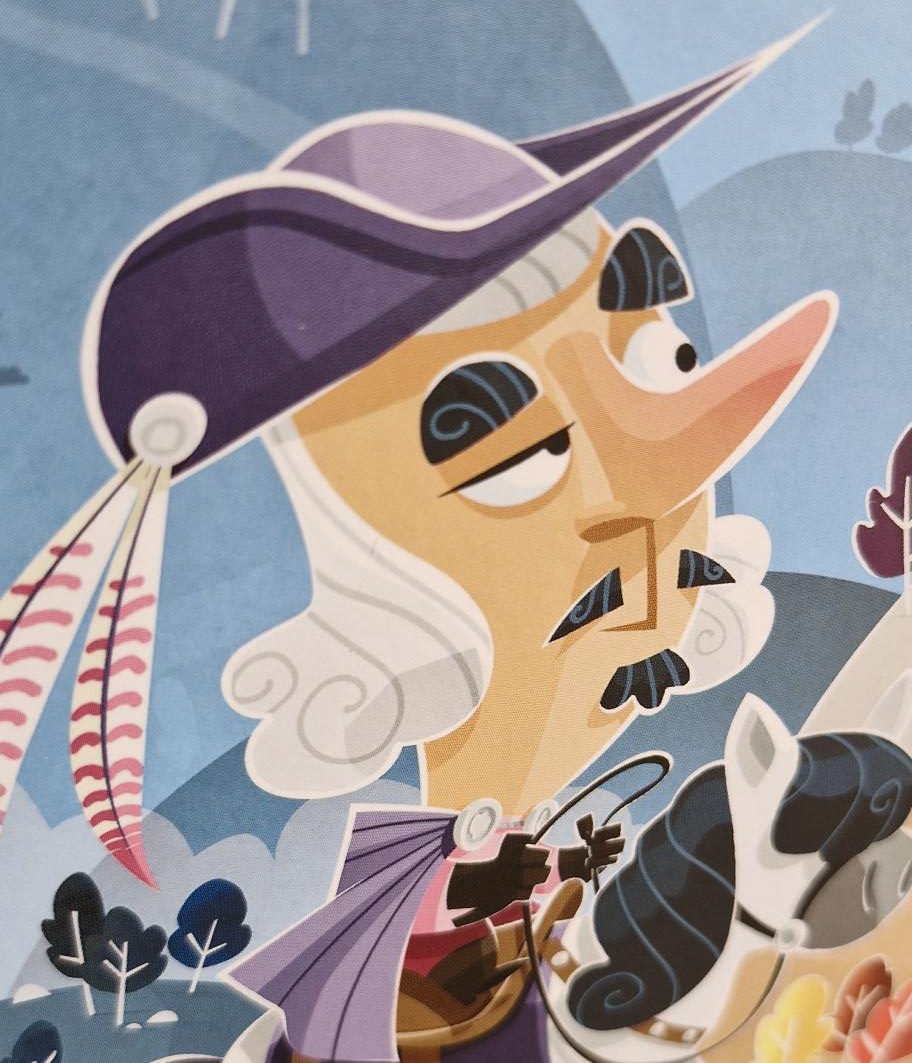
From the outside Castle Combo looks like a fun snappy card game with jolly artwork of knights, jesters and bombardiers where you breezily take cards from the centre of the table, adding them to your display almost like you’re collecting medieval football stickers. Trust me this is not the case, a few turns into the game you’ll feel like you’re trying to do a cartwheel in a phone box.
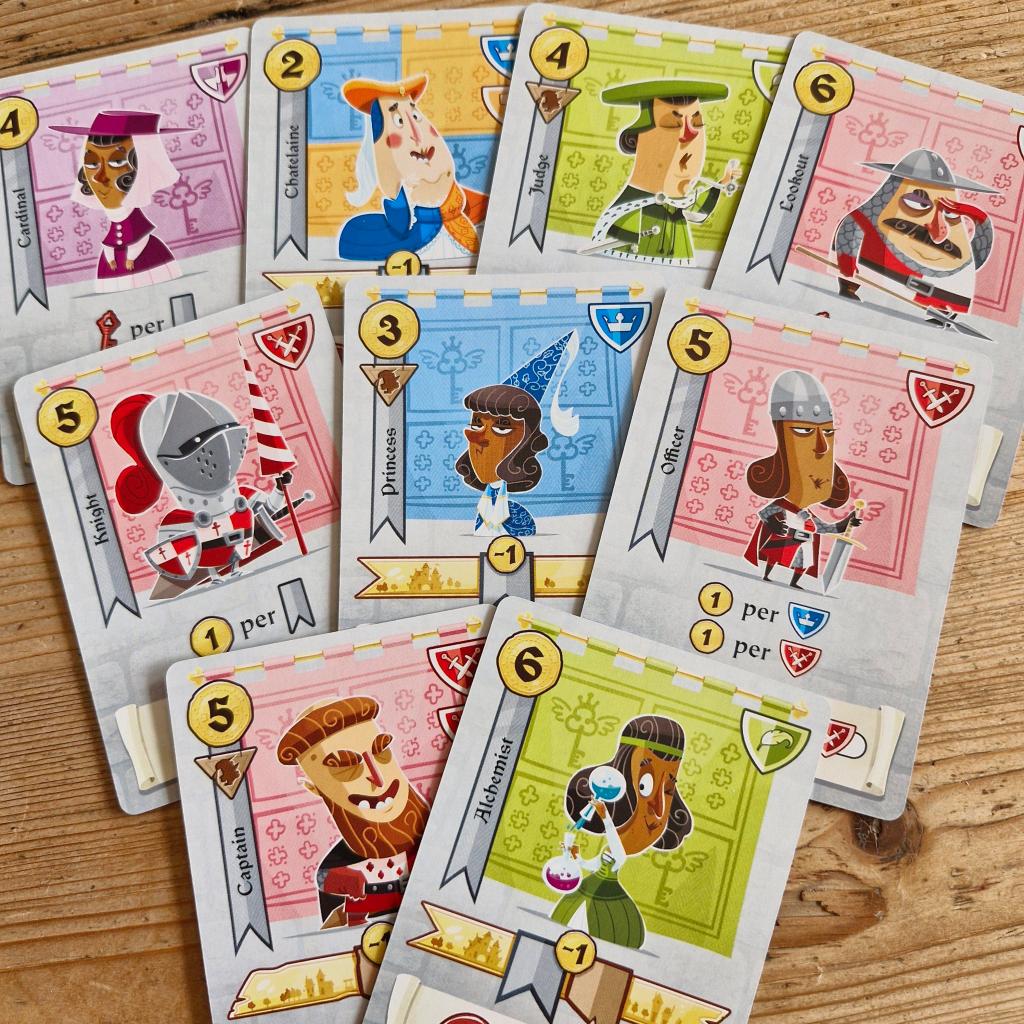
So let’s summarise exactly what is going on here. Castle Combo is a tableau builder, you’ll be purchasing cards from a display in the middle of the table and creating a three by three grid of those cards in front of you. The trickiness of the purchasing decision in this game is actually two layered as the card you choose will give you some sort of instant reward like more money or keys, more on keys later, but will also have an end of game scoring opportunity often dependant on the placement of the card itself and those around it. Additionally each card will have symbols on it in the form of coloured shields that tie into end of game scoring but also can help to enhance the instant reward from other cards taken.
Herein lies the problem, you’re trying to make sure you maximise the potential each card you place but you’re just so restricted with space. Given you’re creating a three by three grid each player will have nine turns in the entire game and every turn has multiple considerations with you doing quite simple but rapid maths trying to establish the possible output from the options both now and at game end.
The arc of this game is so similar to Calico, you start off with an empty grid which feels nice and open and you can just place your first card without too much worry as you don’t have to declare what space that card is in but all other cards have to then be orthogonally adjacent to a previous card, so suddenly after a few turns your grid snaps into a fixed position and now you only have five spaces left and those decisions are restricted and deeply considered.
Let’s go back to those keys we mentioned as they offer you some welcomed flexibility with purchasing cards. Your choice of card is taken from two rows each containing three cards drawn from a separate deck, one being the village and the other being the castle deck. The rows are also home to a messenger pawn that resides beside one row at the start of your turn and dictates the row you may purchase from. However, on your turn you may spend one and only one key to either wipe out and redraw the cards in that particular row should you not fancy any of them or move the messenger to the other row allowing you to purchase from that row instead. Also, keys are worth points at game end, so maybe don’t go throwing keys away without much consideration.
Should you be in a position where even after spending a key you don’t want to or cannot for monetary reasons purchase a card, you may take any card in your row for free and place it face down in a spot on your grid instead. This option will negate everything on the front the card and simply gift you six coins and two keys, which does sound quite good and can get you out of a financial pickle but it does mean one of your nine available spaces is effectively null at the end of the game in terms of offering victory points, so like all the other decisions in this game it shouldn’t be taken lightly.
So what about strategies and the best approach to this game, can you become good at it? Well a lot will depend on which cards happen to emerge at the right time for a particular player and if purchased will slot beautifully into their grid, firing off against all the cards that happen to be around it, belching up a swathe of victory points. That is not to say in any way that Castle Combo is just luck of the draw, far from it. A lot like Calico you will structure your tableau and leave gaps to be flexible. Sometimes things work out and sometimes they don’t. Generally speaking though the person who wins will have played the game well and repeated plays will like a lot of games show what some of the more lucrative point scoring avenues are.
You’ve probably guessed that there isn’t really any player interaction as such. Nothing you do will negatively impact your opponents apart from deliberately taking a card you know they’d want, but given you have so few turns and spaces to play with taking a card you don’t really want to stop someone else getting it will generally do more to negatively impact your own score than trash theirs. Part of my mind has wondered if there could’ve been cards with actions that directly impacted another player, like forcing them to turn a card over or move a card but on reflection I think this would be far too infuriating and generally speaking this experience is perfect as it is.
With that we’ve pretty much covered Castle Combo, a simple snappy yet thinky game which fits into just half an hour or thereabouts, after which you’ll very much feel like you’ve taken more than just nine turns, this thing feels wholesome and you mind will feel more like you’ve been playing some sort of mid weight game. There are other elements to some of the cards that will for example allow you stash coins on them for points and others that will provide discounts on further purchases but we wont spoil too much more and you should find out these things for yourself.
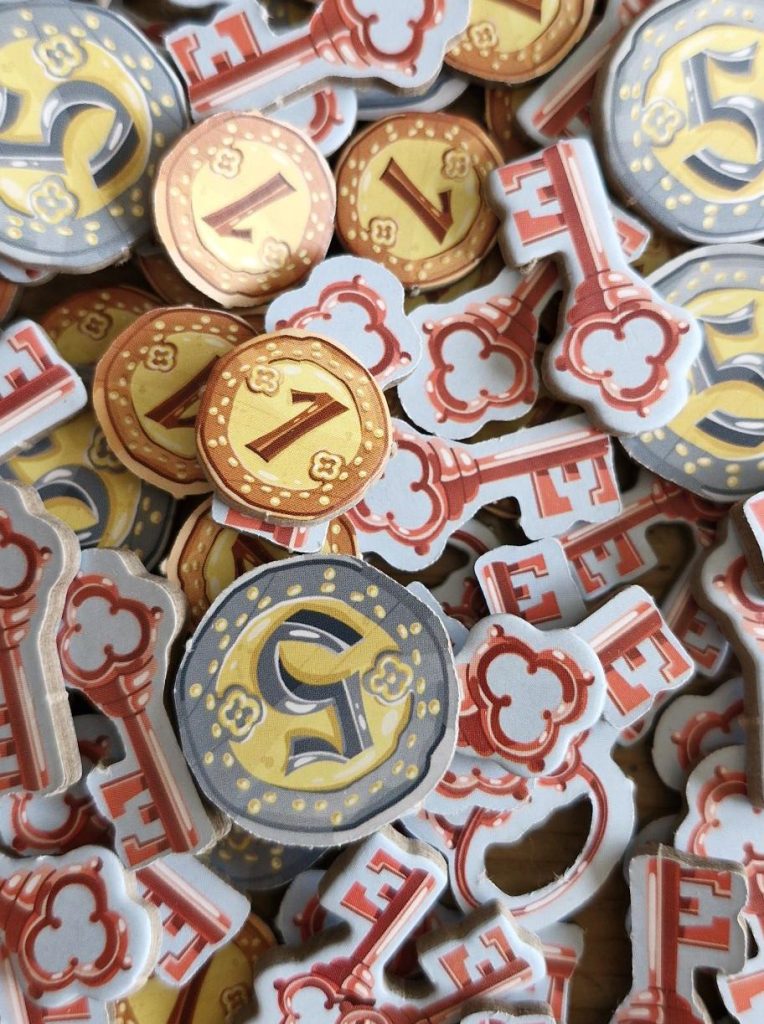
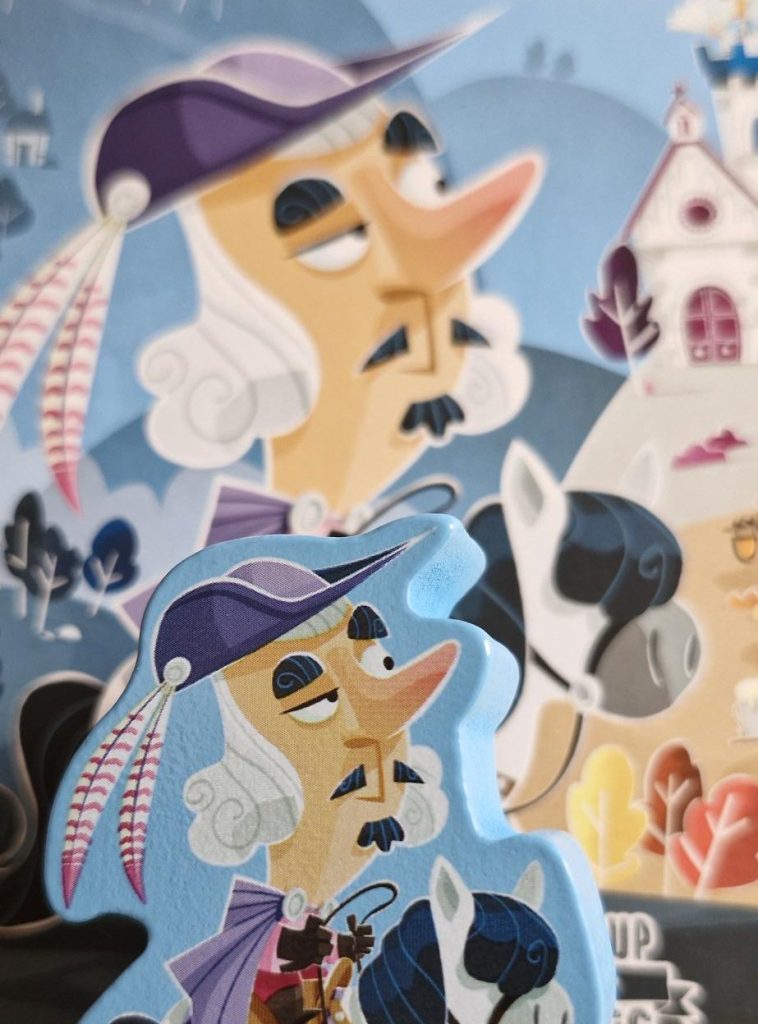
The production quality is great with lovely thick card coins and keys and the instruction manual is nice and concise with good gameplay examples. The artwork is bright, humorous and beautifully illustrated which will appeal to many people, however my own personal taste would prefer it to be more akin to the darker grittier artwork of something like Citadels. Please though do not let that come across as a negative as Stéphane Escapa really has done a Stella job here. There we have it, much like you’ll study your tableau in this game have a good look at your game shelves as there is defiantly the perfect spot there for a copy of Castle Combo.
-
Flipping good fun
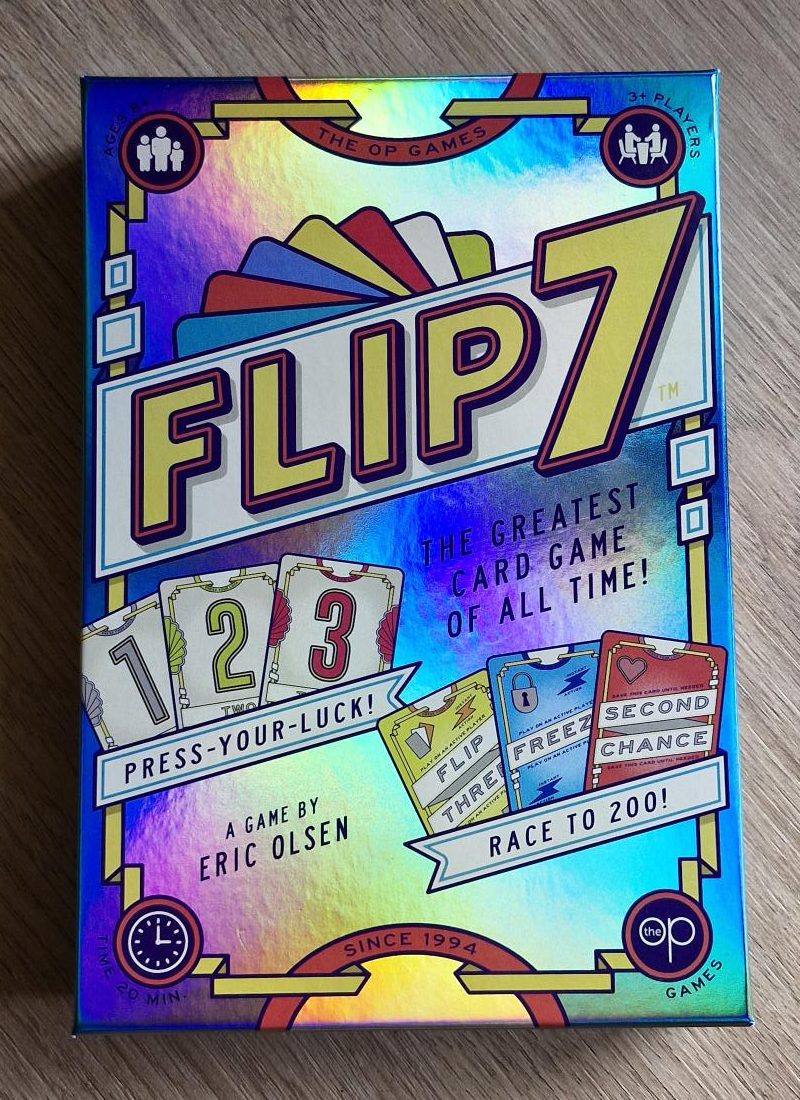
There’s some games that are so simple, fun, accessible and cheap they seem to fall into my collection without me realising they’ve appeared there. My decision to add them almost doesn’t happen, they are the official no brainer, why wouldn’t I purchase it? It’s harder to find a reason not to than just pick a copy up, with classic examples being Love Letter, Skull, Anomia and No Thanks. Flip 7 from The OP Games is another example of this, a handful of rules and a setup time only matched in its simplicity by the aforementioned Anomia, you take the stack of cards from the box, shuffle them and put them in front of your designated dealer.
The game of Flip 7 is so simple it almost makes you cross you didn’t think of it yourself, there’s just enough of something though to give it flavour and a spot all of its own out from the crowd. What you have here is rather close to Blackjack where the dealer will come to each player in turn and just ask them if they want another card or to stick where they are, Hit or Stay as the manual, sorry, leaflet states.

So what are you trying to achieve here? Well this is where the Blackjack comparison moves away somewhat. You’re not trying to get close to or hit a particular total in each round, you’re trying to amass as many points as you can, with an overall target of reaching and exceeding 200 points which will be achieved from several rounds of play. As the round progresses each player will collect cards in front of them that equate to points in their pot, however, if they bust they lose the points, whereas if they decide to stick they’ll bank those points and as you imagine banked points are then safe for the game.
What makes the decision of whether to hit or stay interesting and mildly thinky is the structure of the deck. Comprised of cards numbered from 1 to 12 which represent points, the quantity of each card in the deck is matched by its value, so there are three 3s, there are eight 8s, twelve 12s etc and so herein lies the quandary, high value cards are great points wise but if you ever receive a card that is already on display in your pot, whallop you’ve just busted so those high value cards carry an extra layer of risk. It’s a neat system and as mentioned mildly thinky, you won’t agonise, it’ll be a snap decision but a fun one.
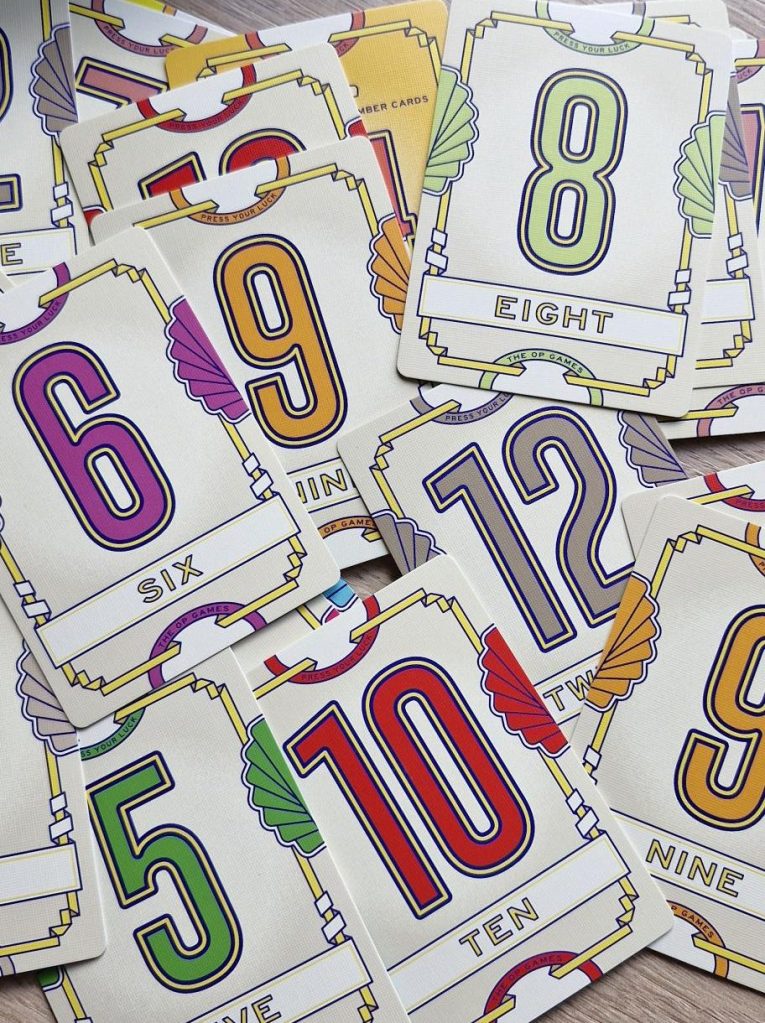
This might sound fun albeit slightly thin, however fear not as the deck does actually contain a few other surprises which come in the shape of action and score modifier cards. Action cards appear in three different types, two of which provide additional consideration. The Freeze card is played on another player who is then automatically our of the round banking their points, so feel free to target that player who is running away points wise to slow them down.
Another called the Flip Three can be played on yourself or an opponent who then immediately has to draw three cards to add to their pot. This can obviously go well or badly from how you look at it, gifting an opponent three cards could send them off into the distance with a huge score or could well bust them, alternatively playing this on yourself can be great or disaster! The final action card is the Second Chance offering you an extra life to avoid busting.
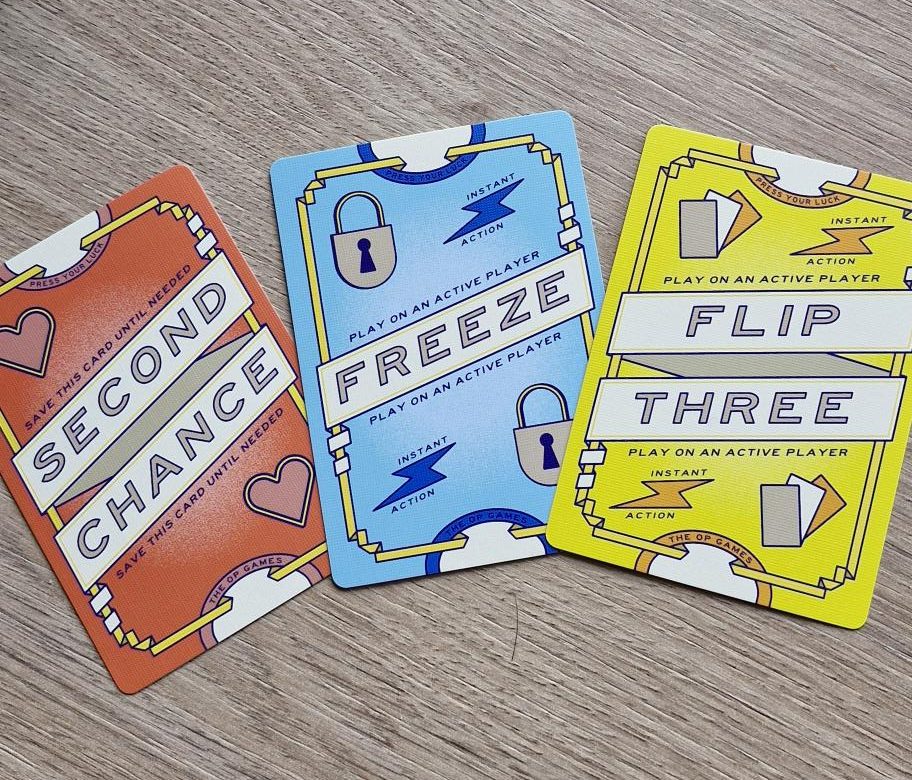
The score modifier cards simply offer bonus points to your pot and there’s even a x2 score multiplier card lurking in the deck which can send you sailing off towards that 200 point target. One question which might be lingering is regarding the name of the game and why Flip7? Well this refers to a bonus for anyone who manages to flip seven different cards in a round, excluding action cards and modifiers. The bonus here is the round ends immediately and that player receives an additional fifteen points. Again a lovely little twist to add a little more drama.
So there you have it, a neat easy to teach and fun to play card game that seems to sit well with all sorts of crowds. It won’t provide entertainment for hour after hour but very easy to whip out after a take away with friends or to fill a gap in a games session. Nicely produced, bright coloured artwork and good quality cards all in a shiny box, which is possibly a little oversized for what is just a deck of cards and may result in some people getting rid of the box and storing the cards in an alternate way which is a shame as the box does look rather nice!
-
Mr InbeQwinto
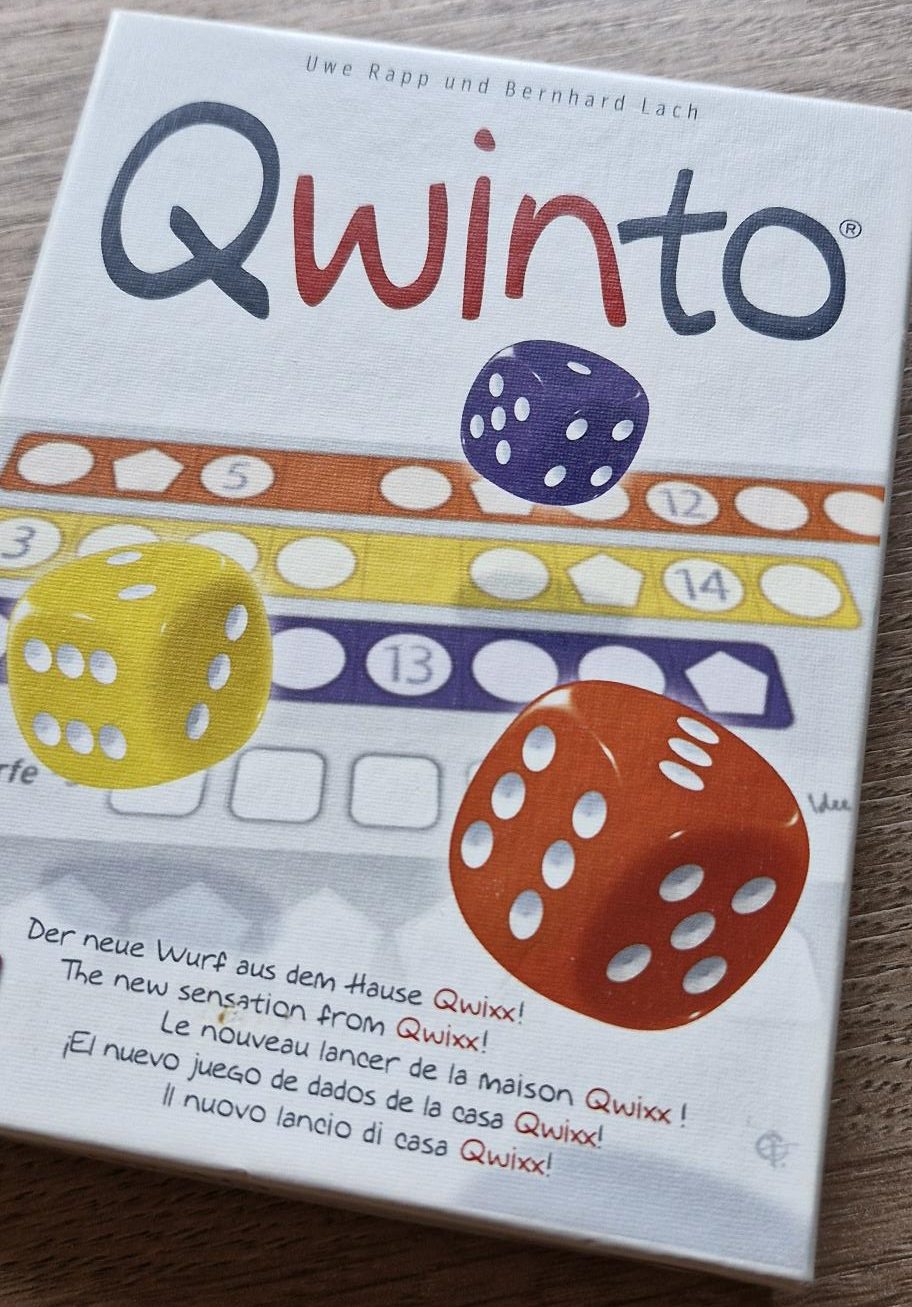
Comparing games to films and television programs is something I’ve found comes quite naturally to me, so funnily enough that’ll be happening again here. There’s some games or programs you just want to show to people because you know it’s going to take them by surprise. From the outside they might have a cover that’s not especially captivating or describing them might make them sound like numerous other titles in the same genre. However, certain things just manage to do what they do with an elegant beauty that takes you aback.
For me Qwinto is like the television series Mr Inbetween. Have you sat down and watched Mr Inbetween? I can imagine most people will probably say they haven’t and isn’t it just that show about a bloke who works security in a night club and is like a hit man on the side? It most certainly is and although that doesn’t sound particularly outlandish you better believe it’s an absolute gem and once you do get around to watching it you’ll be cross you didn’t get involved sooner. Qwinto left me feeling the same, I’ve seen it hanging around in shops and expos, heard it mentioned in podcasts but never actually sat down with it. Until now that is.
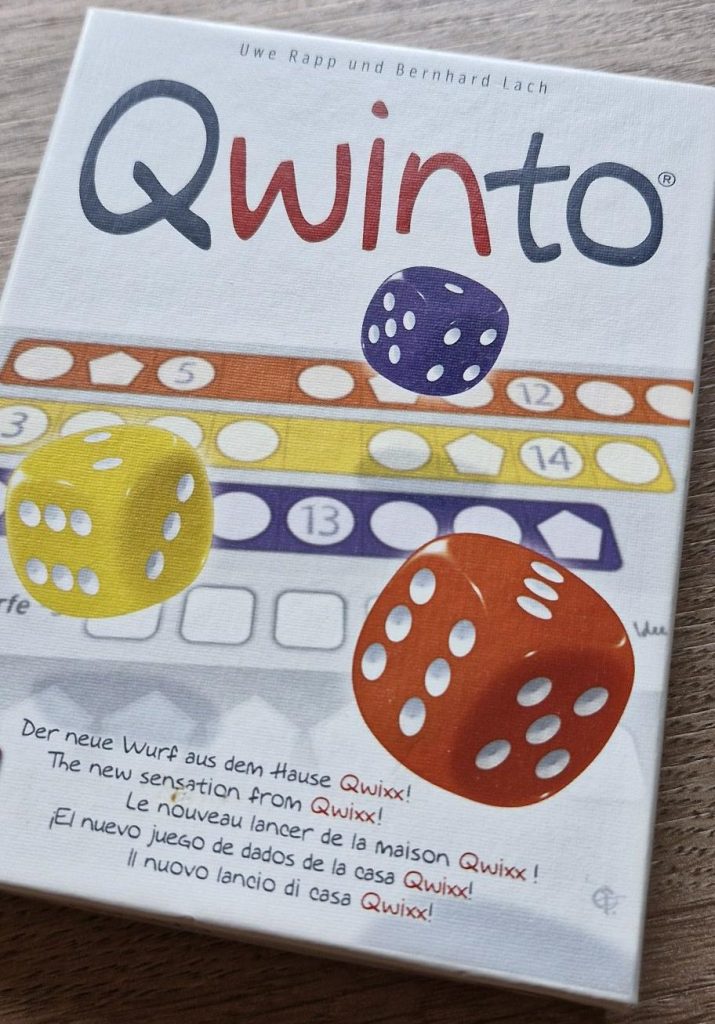
If you know your games, then going by the box art Qwinto is very obviously a roll and write game. The cover shows a collection of dice and some spaces with numbers written in them. In fact even if you don’t know your games then you’ll probably have some idea about what is going to happen. The roll and write genre has had a real resurgence in recent years and seen an array of titles varying in theme and complexity, including the light and tranquil Railroad Ink as well as a Twilight Imperium based game no less! Qwinto however is very much at the lighter end of the scale, in fact I’m not sure there is a lighter roll and write and that includes Yahtzee. Also thematically there is nothing draped over the mechanisms here, you’re not pretending to conquer galaxies or drive trains, you’re just rolling and writing.
So what are you actually trying to do? Well, like a lot of other roll and write games you’re filling up spaces with numbers to ultimately score more points that your opponents. Each player is handed a play sheet which contains three different coloured rows each with spaces waiting for numbers. The numbers you enter in each row have to go in a sequential low to high order but do not have to be in increments of one. Also the order with which numbers are added to boxes is not important, in a similar style to perhaps Welcome To.
It’s probably a good idea to establish how turns actually work, with the lovely thing about Qwinto being that other player’s turns are always of high interest to you as well. On your turn you can roll one, two or all three of the dice, with each dice representing one of the row colours. You calculate the total you have rolled and then you can write that number in one of the rows matching the coloured dice you chose to roll. So for example you roll the yellow and purple dice, added up total eight, so you can then write eight in the yellow or purple row. It really is that simple, with the only restriction being no number can be repeated in a column, also if you can’t enter the number you roll anywhere legally on your sheet then you have to cross out a penalty box, with each penalty resulting in minus points at the end of the game.
So why are your turns of interest to other players? Well the number that you roll can also be entered by the other players on their sheets, so quite often someone will rejoice in the fact you’ve rolled the exact number they needed to plug an awkward gap. The extra bonus is that the other players do not suffer a penalty if they cannot write what you rolled. It keeps everybody’s interest peaked throughout the whole game creating tense and very entertaining moments. It also creates a strategy which might go unnoticed where you can assess what other people are going to have to try and roll which might be within a range of numbers you can avoid and reduce your likelyhood of hitting penalties.
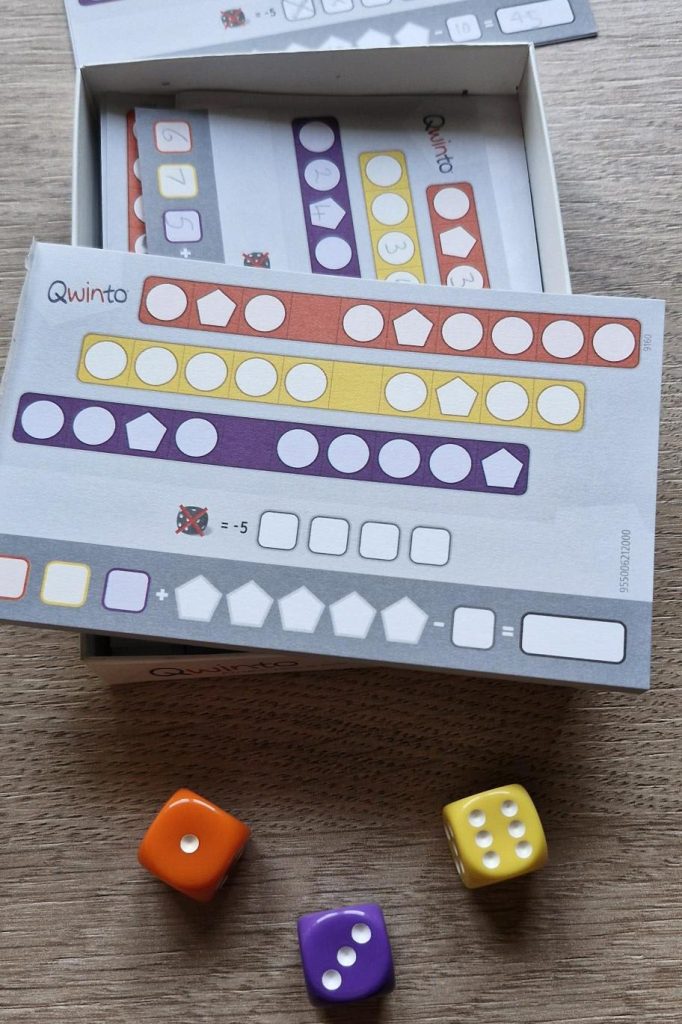
End of game scoring is a very simple affair, which is great as something fiddly would just cut through the dynamic of having this punchy slick game. For each complete row with every space filled in you score whatever the highest number was you entered, with the highest possible obviously eighteen. Alternatively any rows with blank spaces you just score one point per number entered.
There is also an additional scoring system which provides a really interesting extra consideration to this simple system without muddying the waters. Five of the columns on your sheet have a pentagon shaped space, for each complete column that contains a pentagon you will score the number you have entered into that shaped space. It creates some really nice decision spaces where you might abandon filling up a row to fill in a particular space to guarantee a pentagon score.
The next aspect of the game we should cover is how the game ends, which like everything else is simple. As soon as one player has filled up two rows or four penalty marks the game ends immediately. No final turns for anyone, it’s done. Games rattle through in double quick time, usually around twenty to twenty five minutes, funnily enough a similar run time to an episode of Mr Inbetween.
Both will also surprise you with how many thought provoking situations they put in front of you in that time as well as both putting you through a range of emotions. I’m not sure Qwinto will make you sob like a child in the same way the end of season two of Mr Inbetween did to me, well I guess that depends on how badly you take unwanted dice rolls. Also, both have a tendency to make you want to go straight back in for another go.
So there we are, a rather short summary of a rather short game. Are there any negatives? Well, probably some obvious ones being lack of theme and with dice involved there’s obviously the luck element. That said you shouldn’t be going into this to fill an evening as a story driven strategy game. Also, I’m not sure those really are negatives, in fact for quite a few people those are probably positives!
There’s room in everyone’s collection for a copy of this game. Take a look at your shelf, you see that tiny little gap, yeah right there, it’ll fit in there easily. So there you have it, order Qwinto right now and while you’re waiting for it to arrive watch Mr Inbetween!
-
Faraway
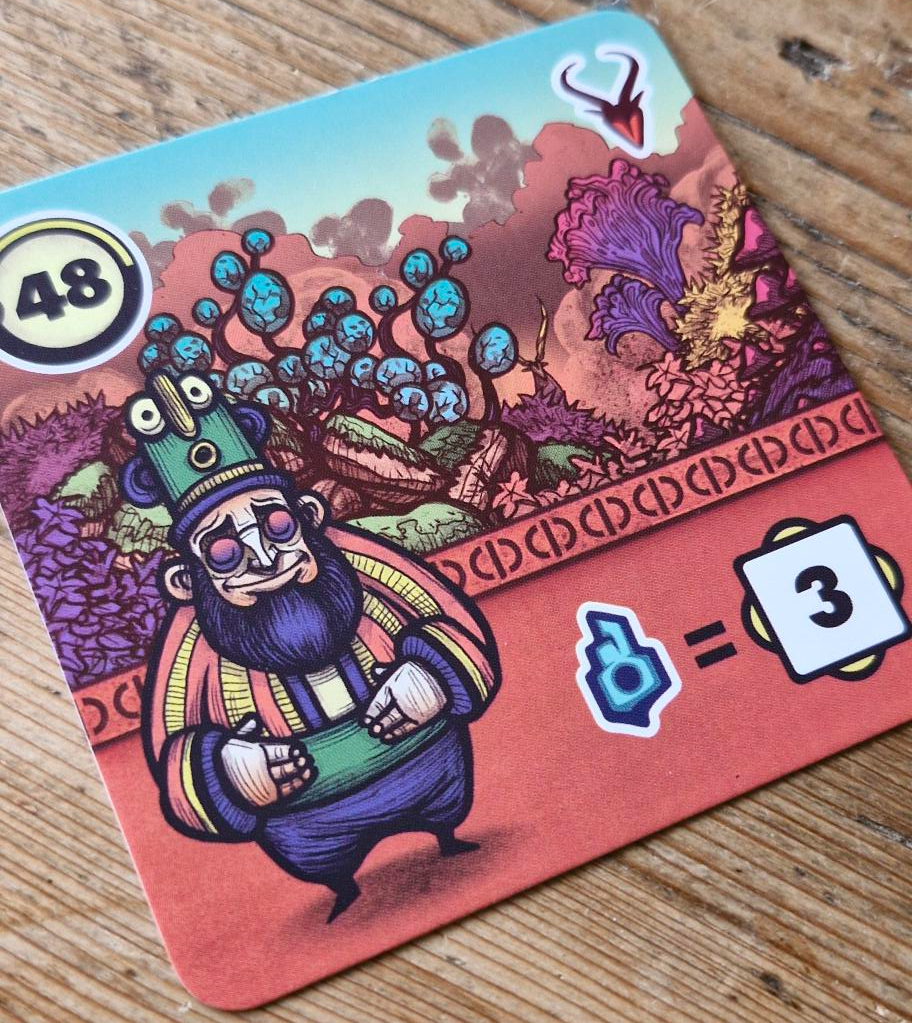
There’s no shortage of good small box card games circulating around this hobby and for people like myself it can be hard not to add just one more of them to the shelf. They seem to be a really easy purchase, not just for the fact they are generally on the cheaper side but because the commitment with them is easy to fulfil. They often have a fairly short set up, teach and play time meaning you can complete the satisfying full journey of a game including post game discussion in a relatively short timespan.
This is very much the case here with Faraway, not only in that you’ll complete the game cycle journey in quick time but that in the game itself you’ll be going on a journey, thematically that is, not literally! You’d think that going on a journey far away you’d need to pack lots, however, looking at the contents of this box it’s just two decks of cards and a scoring pad. It’s svelte, this thing travels light.
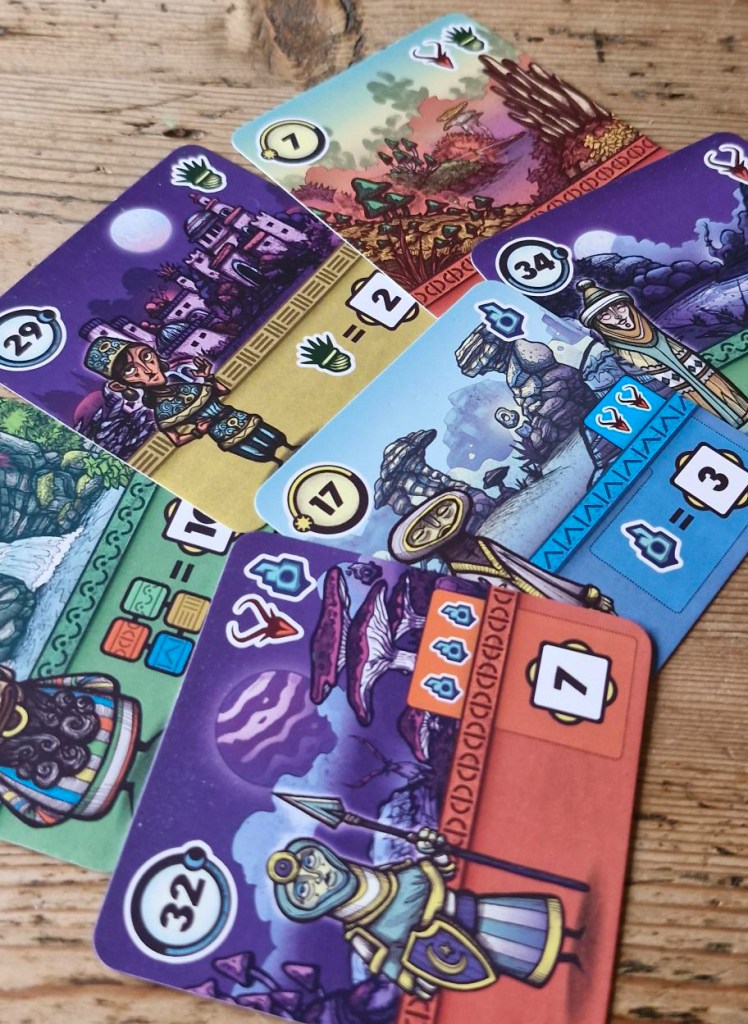
Set up is so simple, you shuffle the two decks of cards and from the main deck you deal each player three cards, then put out a number of cards face up in the middle of the table, dependant on player count. The secondary deck which contains what is known as sanctuary cards is just put face down in convenient reach of all players. That’s it, you are good to go, bon voyage!
Having taught the game to several people it’s interesting that every time the teach is pretty swift but trying to add too many examples of the cards and combinations can bog it down. Generally speaking the best way to learn is know the basic structure of gameplay and then play the first game badly. The mistakes and realisations that dawn on you teach the game far better than being waffled at. Learn how a turn works and just dive in, it comes together so quickly.
For the purposes of this review though we will outline proceedings. The game consists of eight rounds, with turns taken simultaneously which certainly drives game time down. In each round players secretly select one card from their hand, then all cards are revealed simultaneously and placed forming a row in front of each player. Part of each cards’ anatomy contains a numerical value which defines the order in which players then draw a new card from a selection available in the centre of the table which they add to their hand. This process is repeated until players have eight cards in a row in front of them, at which point you move to scoring.
Before we look at scoring we’ll just explain a bit more about the cards from the main deck and also the aforementioned sanctuary deck. Each of the cards from the main deck fall into one of four different colour categories, blue, red, yellow and green. The vast majority of the cards will offer a particular way of scoring points, usually based around colours of card or symbols on display in your tableau. Lots of the cards will also display one or two symbols from a selection of three and often these symbols are required to activate the scoring criteria on other cards.

We mentioned briefly before that each card has a numeric value dictating the order in which players draft new cards for their hand. Well should a player present a card with a higher initiative than the one previously played they get to take cards from the sanctuary deck. These sanctuary cards will offer players additions to their scoring flexibility with extra symbols on display, colours available and also extra scoring criteria. This adds a pleasant extra layer of consideration to proceedings as you have to weigh up playing low numbers to get first pick of new cards against playing higher values to pick up sanctuary cards.
You’d be right in thinking that the whole tableau building and needing certain symbols or resources to unlock and score a card doesn’t feel new as such, nor does balancing the low or high initiative to determine the order of the draft against other bonuses but combining this with the reverse scoring really makes for a very neat very thinky game. So let’s look at this reverse scoring.
When the game ends and scoring begins this rather special aspect arrives and you realise you had your brain in the wrong way round. The first seven cards each player has played are all turned face down and then players score the cards they’ve played in the reverse order with which they were placed. Why is this an issue? I hear you ask. Well most of the cards will contain points players might score by playing them, note the use of might. Cards will often have a series of symbols on them required to be visible in that players tableau in order to effectively unlock the score. However, if those symbols are on cards which are currently face down then they’re obviously not available. This is where you realise the order in which you played your cards becomes so very important, you need to plan and think in reverse.
Some cards will offer a big return in points but often require three or four symbols in order to be active, so these cards need to be placed first and the cards offering those symbols after so that as you travel back down the line of cards all the ones you need to score the big points are already turned over. Something else that can come into play is the beloved hate drafting, as committing to a certain card that offers big points also signals to other players what you’re after.
So then comes the consideration of do you play low cards to get first pick from the middle but then potentially miss out on sanctuary cards, which can be so useful as they do not get turned face down and their bonus is ever present. However, sanctuary cards are drawn face down so it’s luck of the draw. Aggghhhh it’s a painful delight, it’s got terrific layers of consideration but it’s never stodgy, you don’t feel bogged down as the game is so short you can make decisions and know they’re not going to haunt you for forty minutes.
The short playtime for this game has meant every time I’ve played a game there’s been a request to play a second and third time. It seems to promote a desire to achieve an almost perfect tableau where players can score from every card, which, spoiler alert doesn’t really ever happen. You have to accept that often you are simply putting a card down purely for the benefit of scoring another, the perfect combination will not happen. This isn’t a bad thing at all as it creates an addiction to trying.
The concept of going on a journey meeting different characters at each step to establish what they need you to essentially bring back is a very nice idea and does fit the mechanics, however after a few plays you forget that’s what is meant to be happening and you’re just focusing on the symbols on the cards. That said it’s far more pleasant to play with cards containing artwork, which we must say is of a very good standard than plain cards and symbols devoid of any theme. It gives the game charm and warmth, a personality really.
There is news of an upcoming expansion which is certainly interesting and pleasingly it looks to be in the form of what is essentially a booster pack of cards. Those of which can simply be shuffled straight into the main and sanctuary decks and be utilised without any extra disruption to the base game. Bloating this product with too many extra rules would be a bad move in our opinion.
So there we have it, in conclusion Faraway is a solid well considered thinky card game offering interesting decisions and a real arc in what is a pretty short timespan. Presentation is lovely and the components great quality. This game deserves a place in any collection, very easy recommendation.
-
Raise a glass
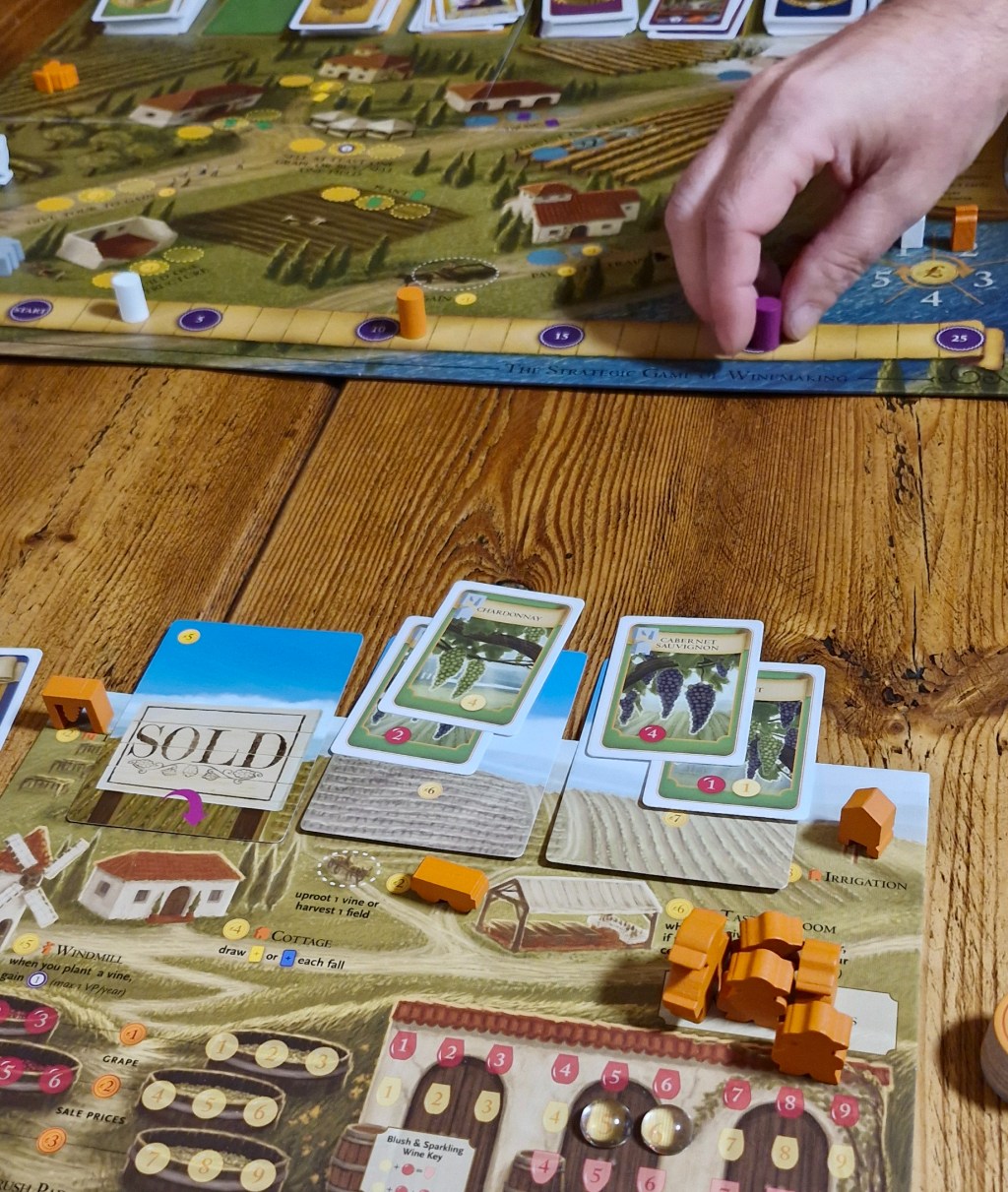
The rather sophisticated looking Viticulture has garnered a lot of praise over the years, often being listed in people’s top however many games lists. Due to the status of this game I felt a copy of it should be added to my cellar, however, much like a distinguished bottle of wine it has sat there gathering dust and ageing for quite a while. So the time felt right to pop the cork on this one, let it breathe and then swirl it around and see what the fuss is about. So here are my thoughts after just one play(glass).
Straight away just from looking at the box and the subject matter this feels like its meant to be a grown ups game. Not just in the fact it’s about wine but the art style, the quality of the components and the way they fit into the box in neat trays, the quality of the manual and numerous other touches. Thematically it would almost be better placed alongside our cookery books instead of sitting next to Quacks of Quedlinburg and Galaxy Trucker. It looks like a connoisseur of classical music being forced to share a table with two stoned ravers at Mcdonalds.
Learning the game I wasn’t completely cold going in, it’s well known this is a solid worker placement game. A genre regarded rather fondly within our gaming group, with titles like A Feast for Odin, Agricola and Pipeline some of our favourites. So how would this compare? Well from doing a learning session and quick couple of turns to effectively rehearse the teach it became apparent that Viticulture was probably a bit lighter than those aforementioned games. Difficult to target in on exactly why but immediate direct thoughts were less options than Odin and it didn’t seem that you’d be as punished for mistakes as you would in Pipeline.
All of those games certainly seemed to focus around a core system to nudge and work, with spaces to enhance the productivity of that central element. I suppose this is standard worker placement design. Viticulture’s example of this is certainly very pleasing with a three stage process of planting vines, harvesting the grapes and then converting them into wine. It’s not quite a brain burning as Pipeline’s system of building a pipe network to process oil but it does certainly require some degree of forward thinking. It is also similar to Pipeline in that you’re ultimately working towards fulfilling orders/contracts but you can sell off resources (grapes or oil depending which game you’re playing) before converting them to get money. So it has that very pleasing dilemma.
So onto our first game, played at three player count. Picked up quickly and everyone was displaying their thinking faces after just a couple of turns. System and structure wise it all felt very familiar to us being quite seasoned gamers, this is certainly not a negative comment. From the three of us we did all play out quite different strategies. For me I focused on picking up several contracts and working towards them, while the others were slightly more focused on gathering visitor cards. It became apparent that drawing decent visitor cards could have a very big impact in terms of victory points. The final scores were pretty close but it had a similar pattern scoring wise to Splendor of all games. You either chip away picking up points here and there slowly working towards the line of you build up for sudden surge. It certainly demands some further play and probably a revisit in perhaps five games to really try and draw some conclusions. Certainly though after a single play we could see why this is such a popular game. We’ll be back after we finish a bottle or two…
-
It’s make your Mind Up time
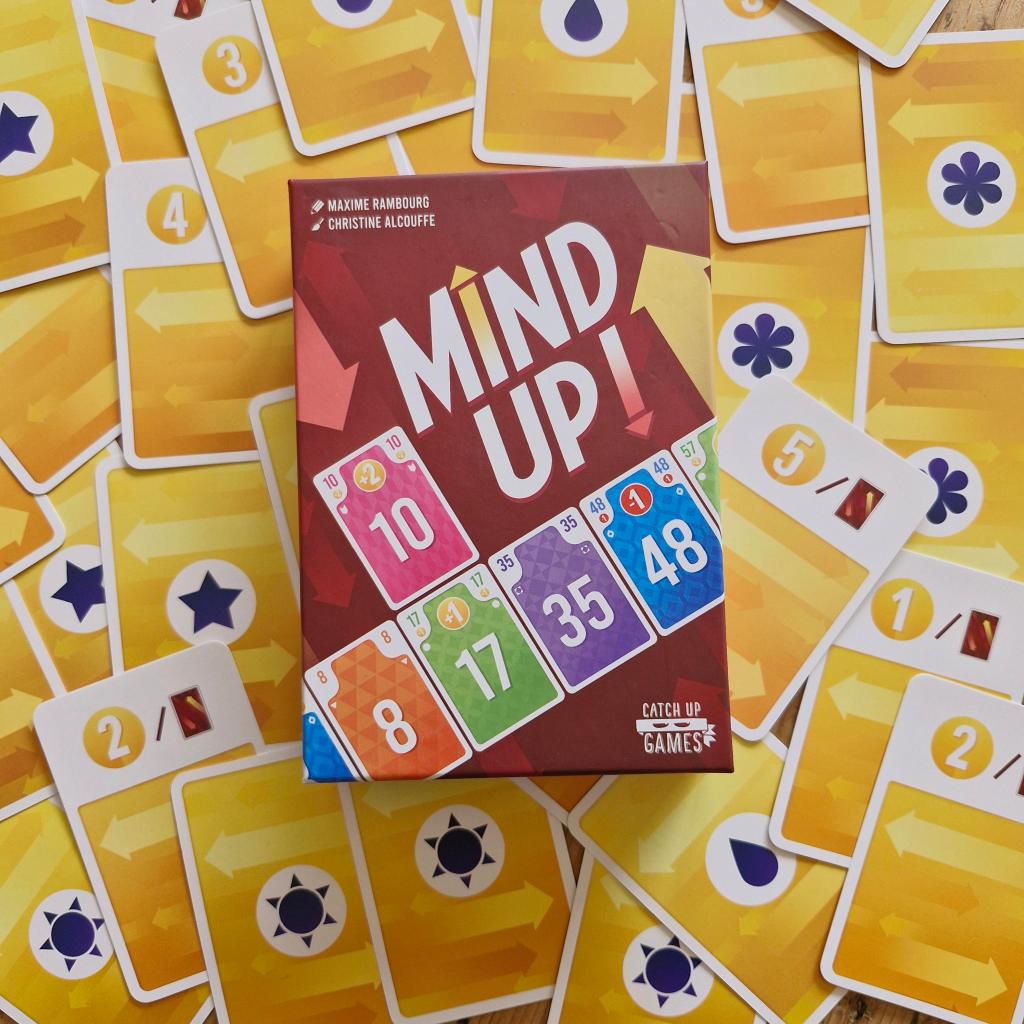
Mind Up sits in the themeless small box card game category, which sounds like a bit of an insult doesn’t it? Well it most certainly isn’t meant to be, as clever themeless card games can often be most enjoyable and a very useful weapon in the arsenal of a gamer. Certain themes can put people off who are perhaps not as thematically relaxed as others from sitting down to play a game that they might potentially otherwise enjoy. However there are no fantasy characters or secret agents here to threaten your reputation among others, just safe old numbers on cards. So fear not worried ones you’ll still be recognised as a cool grown up if you play this game.
Right so what do we have in the box? Well according to the very nicely written and designed instructions we get cards, 104 of them to be precise. These are broken into three groups, sixty main cards numbered from 1 to 60 divided into five different colours with twelve cards in each group. You then have thirty scoring cards, five for each player numbered 1 to 5, that’s right this game plays up to a hefty six people. Then finally fourteen bonus objectives which we’ll come to later.
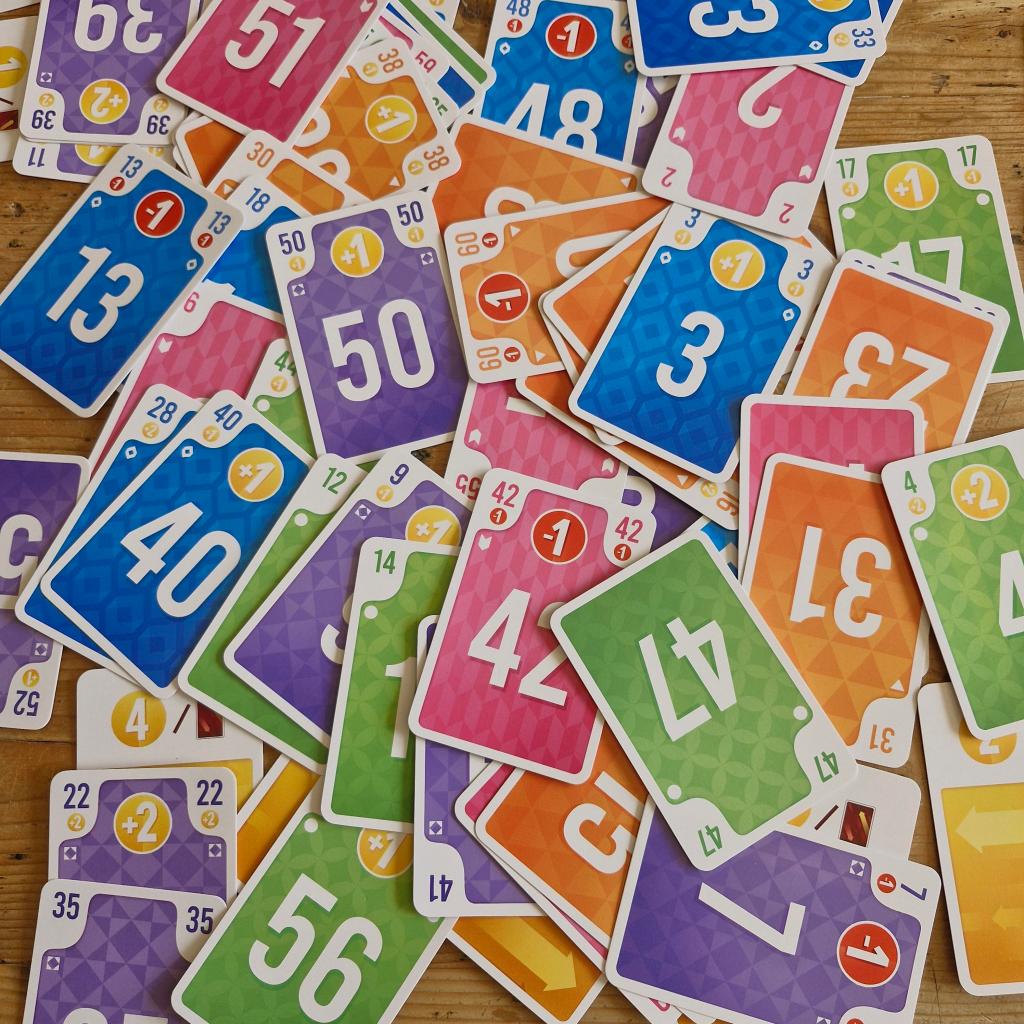
So now we’ve covered the games streamlined contents how do we play. Mind Up is a blind bidding almost set collection type situation. To start the game each player is given a set of scoring cards and seven random cards dealt from the main deck. One player shuffles their scoring cards and lays them out in front of them with everyone else copying whatever that order is with their own set of scoring cards. A number of cards matching the player count is drawn from the main deck and laid out in ascending numerical value in the middle of the table and you’re ready to begin.
In each turn of the game every player is going to simultaneously choose a card from their hand and place it face down in front of them, once everyone has chosen you all reveal. Then going through the selected cards from low to high each player takes the card from the centre of the table that matches their order replacing it with their bidding card. The taken card is then added on to one of the scoring cards and then the bidding process continues with players then bidding with another card from their hand for the cards now on the table. This continues until players have one card left in hand which is then added to the appropriate scoring card and then players calculate their score.
This pattern of bidding for cards continues for three rounds and as you would expect the player with the highest score at the end wins. There are however a few extra aspects which make this game very interesting to us, firstly the scoring card system. As mentioned the cards are numbered 1 to 5 but dealt shuffled so as an example everyone may end up with 3,5,1,2 and 4 in front of them. What this means is every card allocated to the first scoring card will be worth 3 points, cards added to the second scoring card 5 points each and so on. The interesting aspect here is the scoring cards have a set colour allocated to them based on the first card placed there, so the first card you take in any round is always put on the first scoring card and any cards taken that match colour also placed there. However, as soon as you take a second colour that is added to the second scoring place. So what you’ll be trying to do is maximise the placement of particular colours in particular places, which becomes a really lovely puzzle of trying to guess what bid card you need to play to take the correct colour from the middle of the table, with the kicker obviously being everyone is trying to do the same.
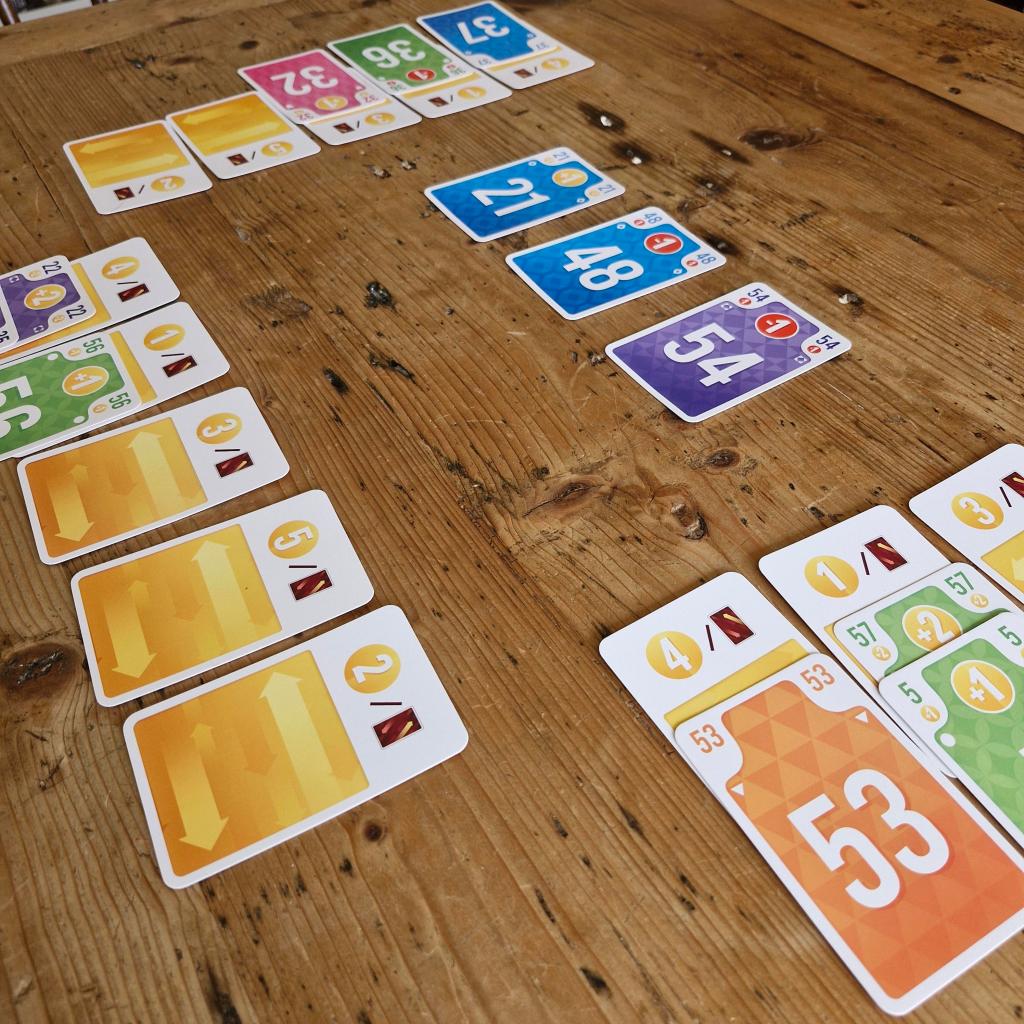
To add extra spice here the order of scoring cards is actually changed at the beginning of each round, so everyone may end up with their high scoring cards in the end places which mean you need to pick up a series of different colour cards to move over and be able to place cards in the better spots. It’s really very clever.
Another really interesting aspect is that at the end of each round after calculating your score you’re not dealt a fresh set of cards for the next round, oh no, the cards you get for the next round are ones you’ve placed on your scoring cards in the current round. In the second and third round you also get an extra card from the deck but essentially what we have here is an almost closed economy. By the half way stage you start to know which are the really high or low cards in circulation and also which colours are well represented. A lot of people might not even notice but for very observant players it can offer an advantage.
These elements make for a really very interesting nugget of a game. In several respects this really feels similar to the rather great 6Nimmt, which interestingly also comes with exactly 104 cards? Both games utilise the system whereby each turn is taken simultaneously with all players each selecting a card from their hands keeping it face down and then all revealing together, which obviously has a big element of luck but also a large degree of considered judgement. You can see where the others players will probably be placing their blind bid, you can’t be absolutely sure but judging it right is tense and a lovely feeling.
There’s something great about having a system whereby everyone is simultaneously selecting cards. Nobody feels any downtime as such, there’s the constant request for your attention and demand on your decisions, often requiring you to make snap decisions which can often be wrong but this just improves proceedings and makes things more chaotic.
We should look at replayability, which is decent as you’ll always get different card combinations but we’d say that most games will feel somewhat similar. By which I mean you won’t really play Mind Up wondering how different games will play out, you’ll know how the game will feel. This isn’t a bad thing as such as you’ll never get a poor game of Mind Up but I suppose there won’t be real standout games either. It’s dependable fun for most people although I’m sure the aspect of making judgement calls which in most cases will fall down to luck to some extent will mean some strategy purists bemoan the cards weren’t in their favour. However I would counter this and say there are elements of strategy to when you use certain cards, keeping very low numbers in hand to almost guarantee you take the first card on the table and keeping back the last card of the round to be placed in a particular column. It has just enough of both elements in my opinion.
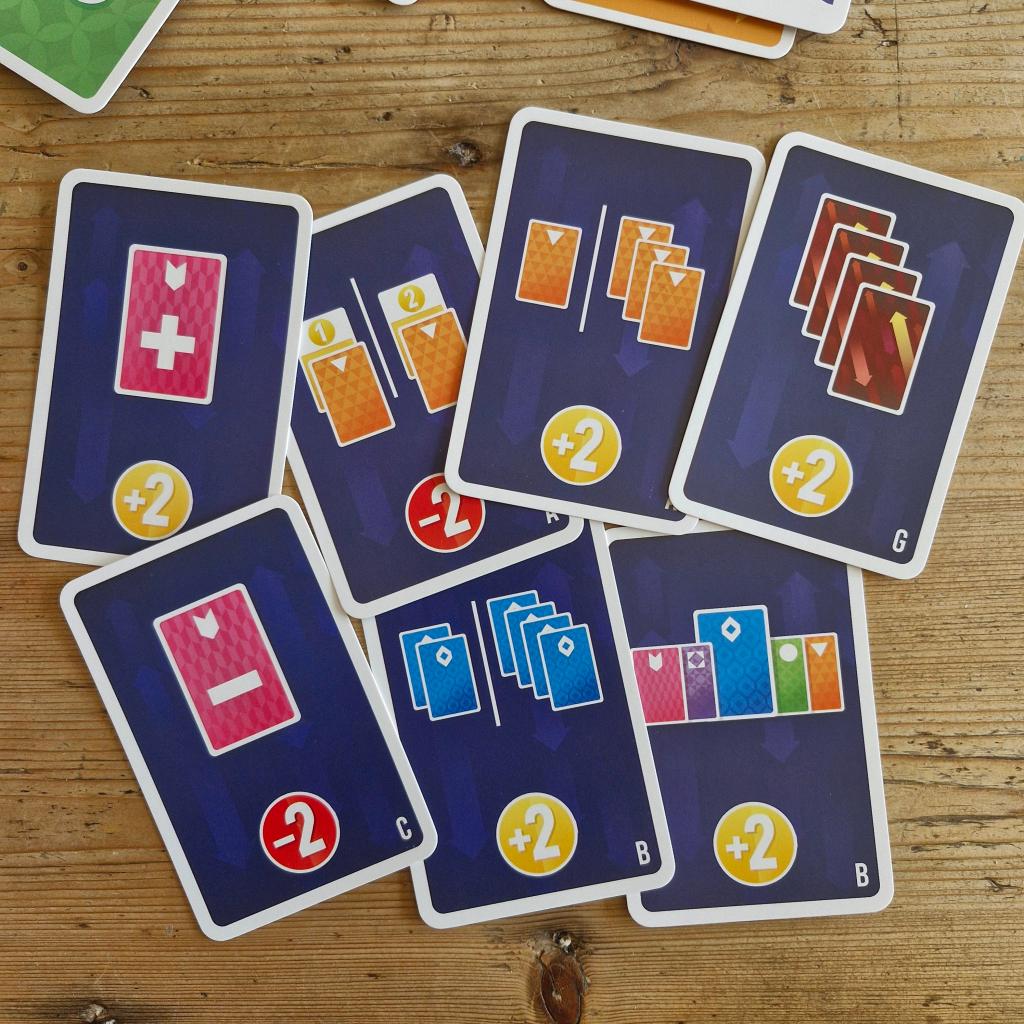
In terms of game time the box is spot on, Mind Up can easily be done in fifteen to twenty minutes with a very short teach. Our group has played this at three, four and five players and it was great at all counts. Coming back to the bonus objectives we mentioned earlier, we have to put our hands up and say we haven’t tried any of them yet as we’ve been perfectly happy with the standard game, however I’m sure we’ll get round to it. Reading about them in the rules it seems like they’d add just enough spice to bring some extra consideration without disrupting the main game.
This game goes right in the collection alongside other quick card game favourites like the already mentioned 6Nimmt but also other great games like No Thanks, Love Letter, Scout and Startups. So there we have it, hard to go wrong here, reliable fun, nicely produced and cheap to buy, it really didn’t take us long to make our Mind Up about this one!
-
Pimping
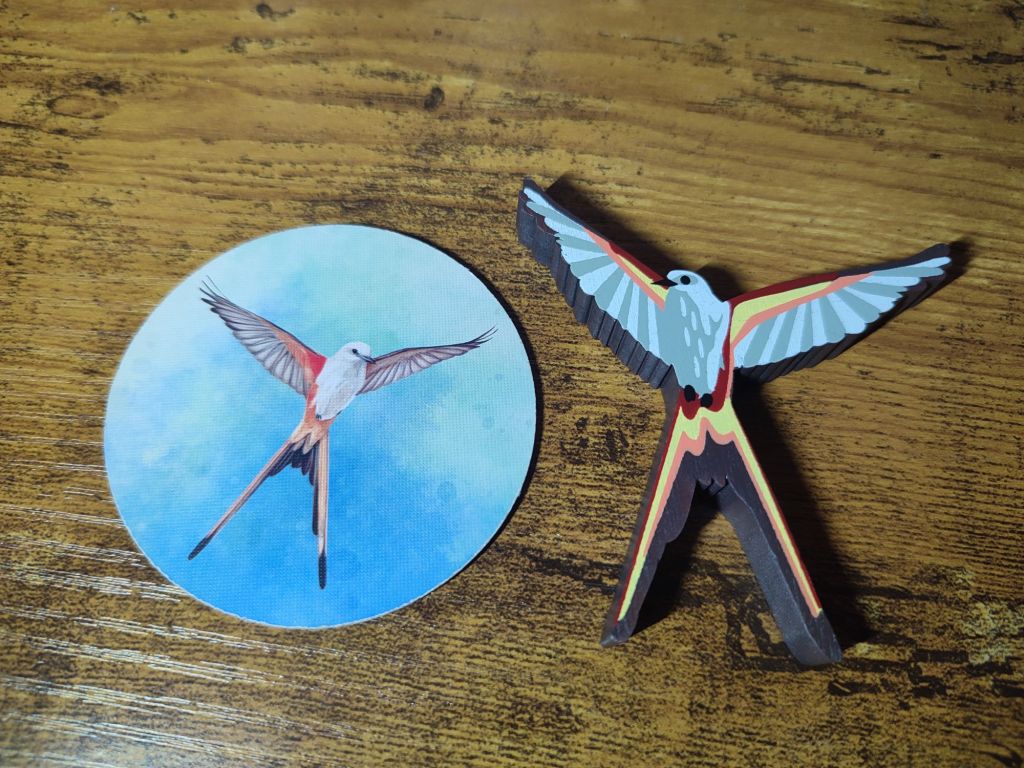
Around a year ago I saw a YouTube vid from The Dice Tower talking about how to upgrade games. I’ve always loved the art and colour in board games, so the idea of upgrading boardgame parts has always appealed to me. So far I have pimped a few games….
Let’s Summon Demons
This was an easy upgrade. I sourced some cheap skull tokens from Etsy, to replace the cardboard soul tokens. It’s improved the game no end by making the tokens easier to see and handle.
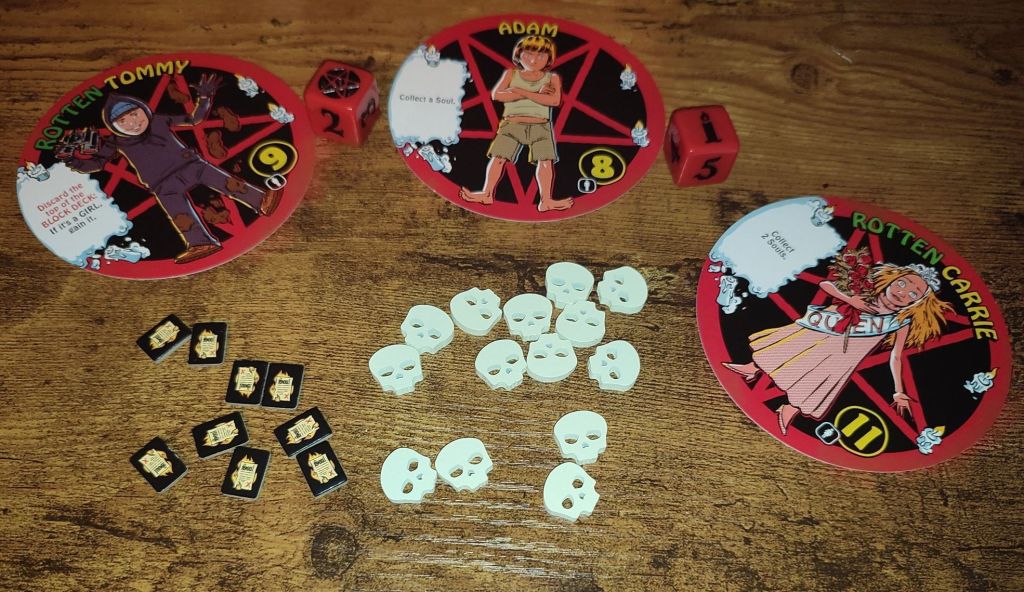
Cardboard souls on the left, skulls on the right. Wingspan
The Wingspan pimping process however has got a little out of hand…
It started out again with The Dice Tower again recommending upgraded eggs. I’d seen the speckled ones from Boardgame Extras, but they were a little… boring. Which is when I finally found a supplier, again on Etsy, but based in the US. They cost a small fortune in taxes and carriage, however the resin based eggs are amazing. I followed that with wooden food tokens from BGE, again expensive but great, a first player marker, and finally some more eggs from a UK Etsy supplier. The second lot of eggs were a little disappointing, however I was their first order apparently, so I’ll let them off!
Now the eggs I find fascinating as I’ve recently got into experimenting with resin dice making, and have a couple of egg moulds that I’d like to start experimenting on. There is a gulf of difference between the US and UK eggs, but it’s given me ideas on what works and what doesn’t.

Old eggs, on the left, US eggs on the right. 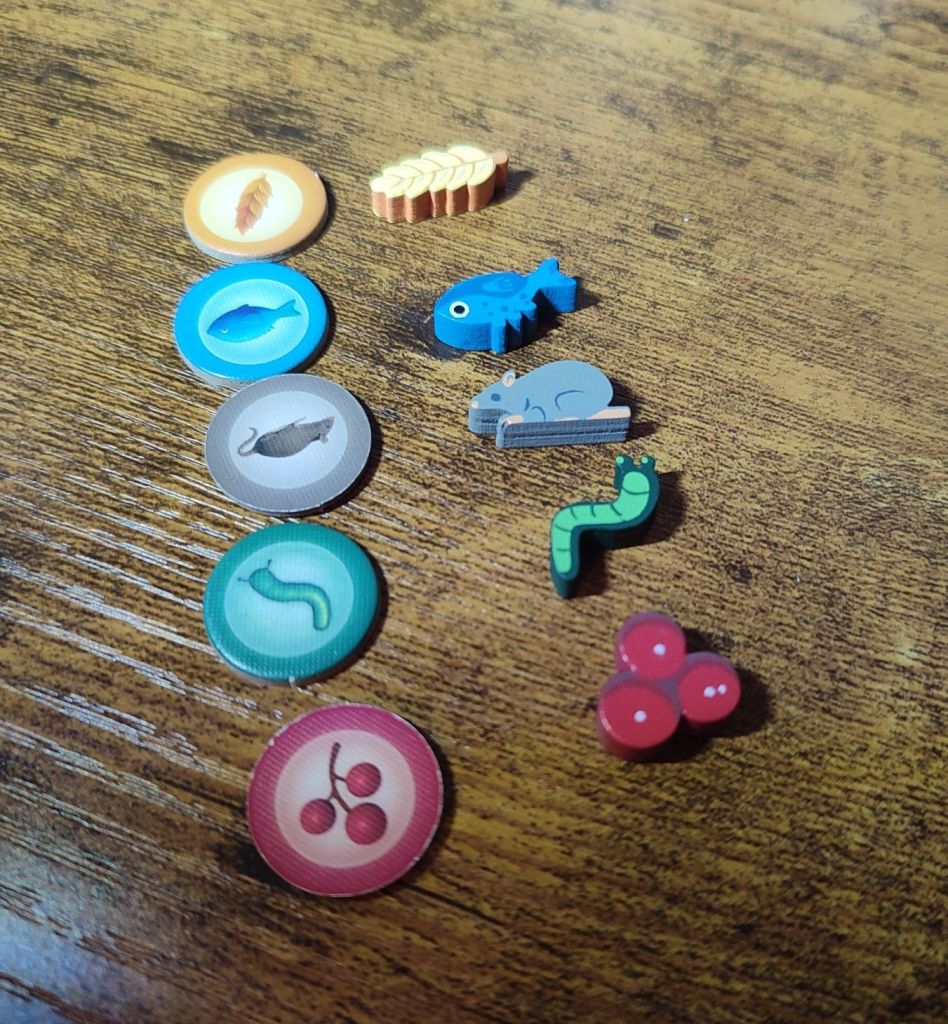
Old tokens on the left, wooden on the right. Yeah you know what these are right? 
UK eggs in the middle. 

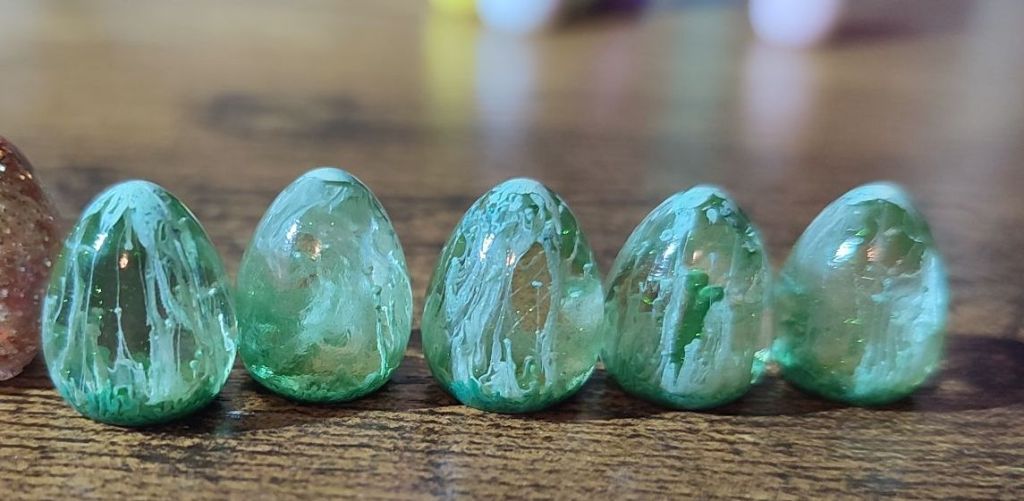
Eggs! So the only things left to upgrade are the storage box things (nests?), bird tower (meh), and the nectar tokens – BGE do wooden pink nectar, or a mixture of flower tokens, that look awesome.
Deluxe Upgrades
The above have all been 3rd party upgrades, however many games have deluxe editions (probably as a result of Kickstarter (another vice of mine)). At the expo I invested in some metal tokens for Flamecraft that look pretty awesome.
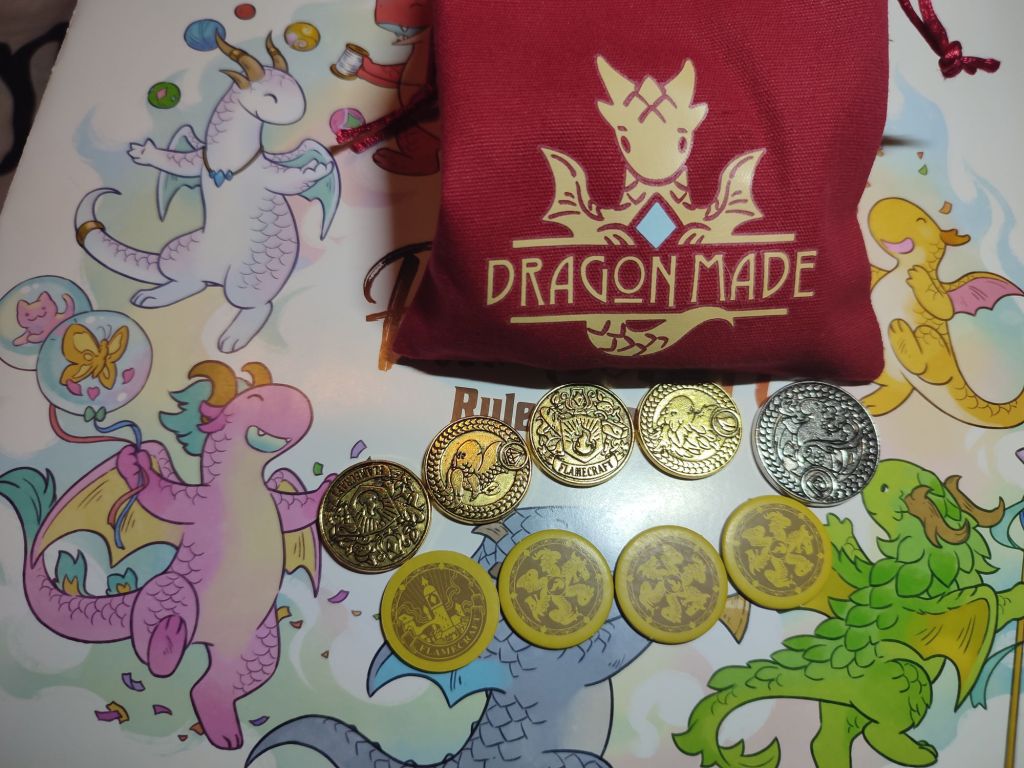
Metal coins and bag, with a bonus silver coin. Boring cardboard ones underneath. With Kickstarter I have been prone to deluxe editions where affordable, such as Canvas, but that’s for another post. 😉
-
Feathered Friend
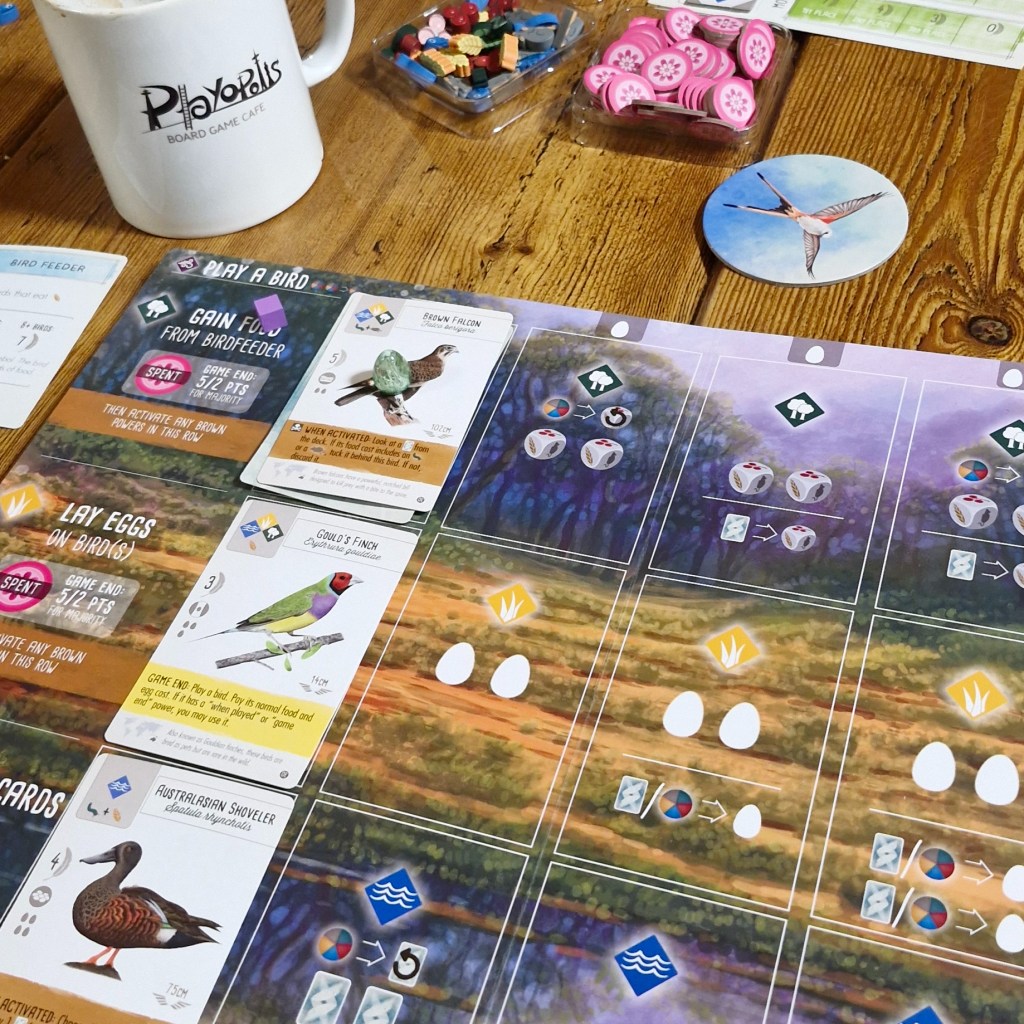
There’s a comfort in sitting down to play Wingspan, with the theme and components laid out before you it feels less like a competitive game and more of a group relaxation exercise. In terms of components and table presence there’s actually quite a lot to look at and take in but it never feels overwhelming, just something you let wash over you. Huddled around the usual table at our local board game café with cups of tea and coffee we almost feel like we’re in a bird watching hut, just enjoying a calm afternoon looking out over this cardboard landscape. Surely these feelings of tranquillity are as big and important a part of board gaming as rock solid rule bases that set your mind alight, aren’t they?
Anyway, Wingspan, what is it? Well in the hobby we’d describe this as an engine builder, which is a game that requires players to construct a system within the game that will efficiently propel them to victory. Nope? Ok, more detail required. In this game players start with a board displaying three empty environments, which over the course of the game you fill up with cards, each of which displays a different bird. So why are you filling up environments with birds I hear you ask! Well on your turn you can you can activate one of the environments to either gain food tokens, lay eggs or draw cards, all of which are essentially resources you need in the game. The key here is that each environment provides a more enhanced version of that action the more birds you have there. Also each bird offers its own ability when its’ environment is triggered. So here in lies the engine, create an efficient array of birds so each environment offers you the optimal output when activated.
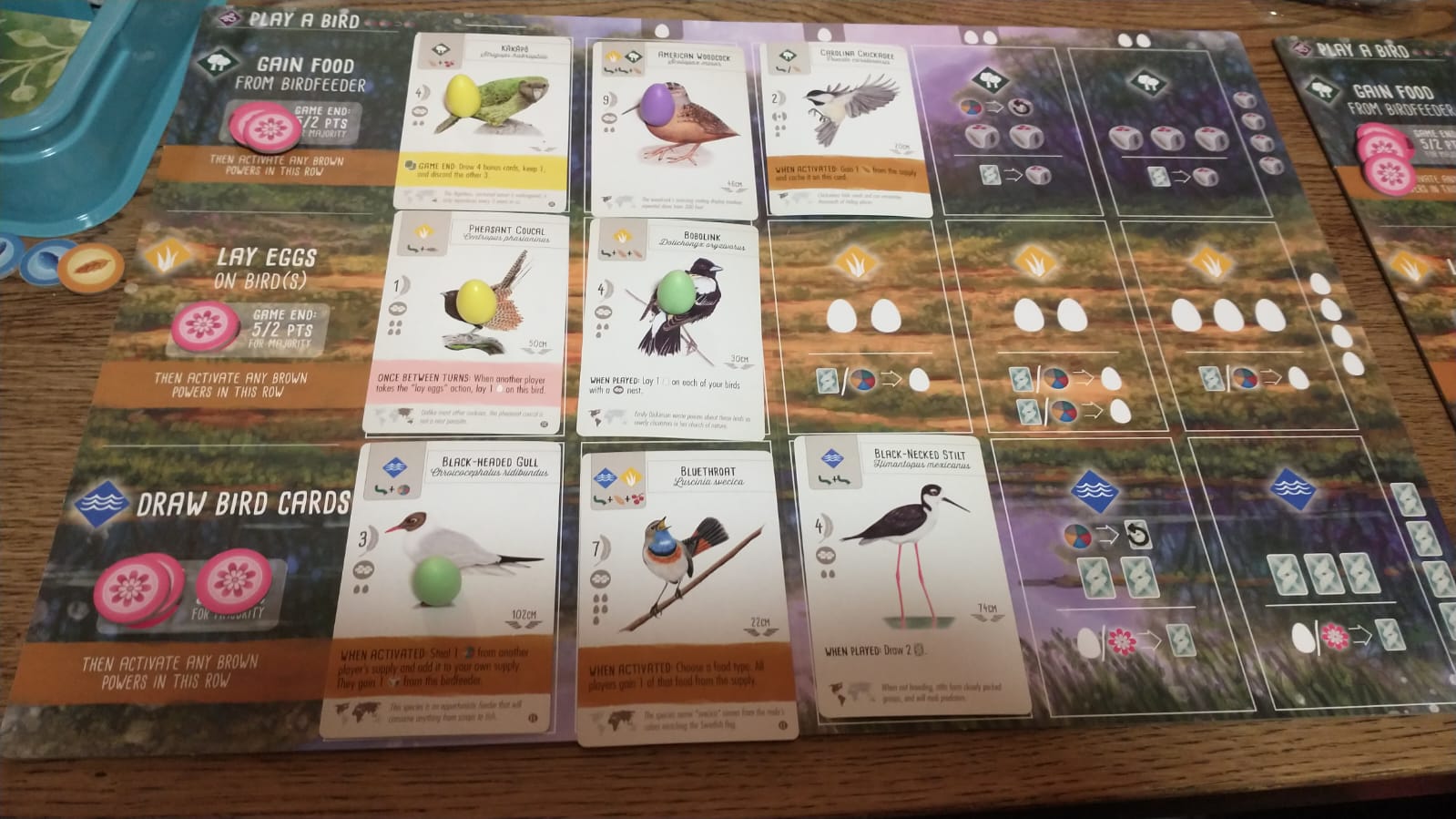
End game scoring is quite a point salad as you’ll score your birds, end of round objectives, end of game objectives and also other bits like certain birds can thematically hunt and store cards behind themselves scoring points, a mechanism known as tucking. You can also score from how many eggs you’ve laid and various other things. Needless to say whatever you do you can pretty much score points from it.
I’ve had the pleasure over the years of introducing people to the hobby of modern board gaming through light, simple yet interesting games like Splendor, Barenpark or Point Salad to name but a few. However, once people have got their feet wet they start to look around and explore the hobby themselves maybe looking for that next step up, often coming back to me with questions about other games and on several occasions they’ve asked me about Wingspan. There’s something very intriguing about the delightfully welcoming cover art with its soft colours and the title that people want to engage with. This isn’t about war or backstabbing people, this isn’t a loud science fiction explosion happening on your tabletop, this is gentle, this is nature, this is what people want and need in our current climate.
Something else that people need, well, want, are to have nice possessions. A large factor within the modern board gaming hobby is the quality of components and the standards by which people judge a product. In a society so driven by digital technology the resurgence in escapism to board games has been large. There’s a desire to handle quality tactile components, the days of dusty track roll and move games with small plastic pawns has been ushered out, the people want textured card stock, chunky dice, thick cardboard and beautiful art. All of this is provided by Wingspan, quality production runs throughout in typical Stonemaier fashion and the satisfaction of rolling those big dice through the bird box can’t be understated. People outside of the hobby might well think this strange but it is certainly an aspect of the hobby that has become important. Primary reviewers will often have sections of their reviews that look purely at the quality of the components and if you’re going to get nice bits for your bucks.

Common questions from people not immersed in the hobby with regards to playing ‘one of our games’ are “Is it really complicated?” and “Does it takes ages?” Of course I will always answer “no” to both questions so as not to scare people away but I can feel confident in relation to this here. Game length can be a tricky area to get right, the balance between being too short and feeling rushed and being overly long and causing people to drift off and lose attention is slim. Difficult to say if Wingspan or in fact any game gets this absolutely spot on but I guess it does a good job. Turns do whip round at a decent pace thanks to only having to decide between one of the four actions, with you generally having decided upon your next action before the game gets back to you and not a huge amount happening on other player turns to alter your plans as such, apart from maybe that bird you’ve been waiting for appearing on the selection tray, quick grab it and lay some eggs next turn.
Game mechanism wise there are perhaps a few issues that have been highlighted in various notable reviews, a prime example being personal objectives. Something you’re trying to achieve during the game to add a few extra points to your score, however you often have no direct way of influencing the likelihood of it happening or strategising towards it. Whilst this is a valid criticism and can bring a certain frustration I would argue this actually leans into the theme. You’re often waiting for the right bird cards to appear and that could be looked upon as essentially bird watching couldn’t it? You know the bird is out there but can’t guarantee it’ll land in front of you, however if it does that’s a pleasant moment. In many respects the fact those birds perhaps don’t appear is quite alright, perhaps we’ll see them next time. I’m not entirely sure that was the reasoning behind that design aspect but either way I’m happy to go with my reasoning.
Although the game delivers a tranquil relaxing experience, it would be fair to say that this comes with a drawback, well what would be considered a drawback to some. The relaxing nature and relative lack of any player interaction or for want of a better word nastiness, means Wingspan doesn’t really provide memorable games or moments, there’s no real roller coaster of emotion which is something we also experienced from San Juan which we covered in a previous post. That’s not to say you don’t remember enjoying the game as a whole, it just never really has dramatic or stand out pivotal moments of monumental success or complete failure that produce lengthy post game discussion. Again this isn’t an issue for everyone and in honesty that again fits the vibe really. A lot of people who are perhaps not massively into modern board gaming are just enjoying not having to sit through the hours of Monopoly.
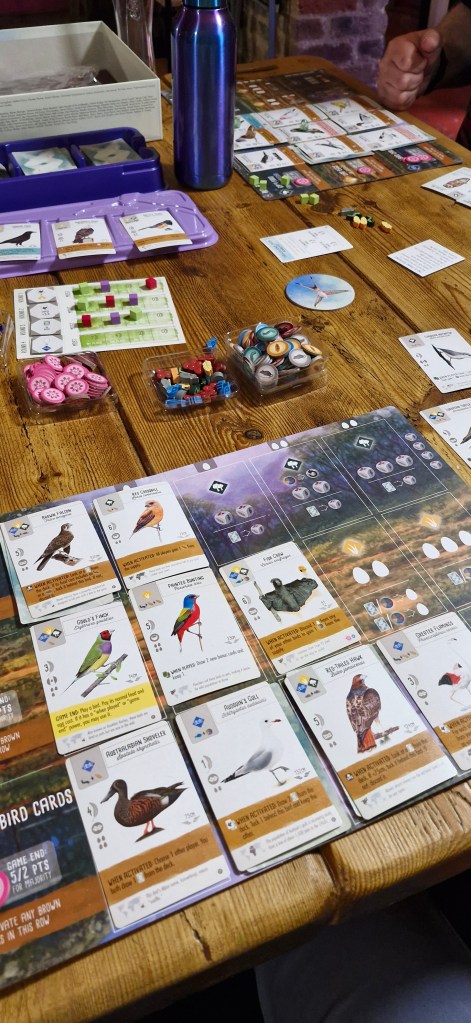
Those of us within Cardbaudit have found Wingspan and to a large extent Elizabeth Hargrave’s follow up title Mariposas have as much a place in our gaming agenda as any other games that would stereotypically fit with us. Did this come as a surprise? Well not really, its’ release came several years into our journey in this hobby which has very much encouraged us to embrace non stereotypical titles. However if we had crossed paths with Wingspan at the entry point into the modern hobby or you’d told my young Warhammer playing self that we would be playing games about birds and butterflies you might’ve received a raised eyebrow.
It can’t be shied away from that the games immediately gaining our attention in the early days were thematically gun heavy or containing zombies and war but the hobby and community around it have certainly altered that and it’s only for the better. Not because I’ve moved totally to tranquility and nature, dispatching a zombie with a shotgun still feels as joyous as ever, but because our gaming sessions meander between looking for birds, racing push bikes, building a construction site, running a farm and saving the world from diseases which is largely down to having an array of different people from different backgrounds bringing games to the hobby, which can only be a positive thing. Bravo Elizabeth Hargrave it’s safe to say Wingspan has really made a nest for itself in this hobby and I’m sure it’ll continue to circle around us for many years to come.
-
San Juan
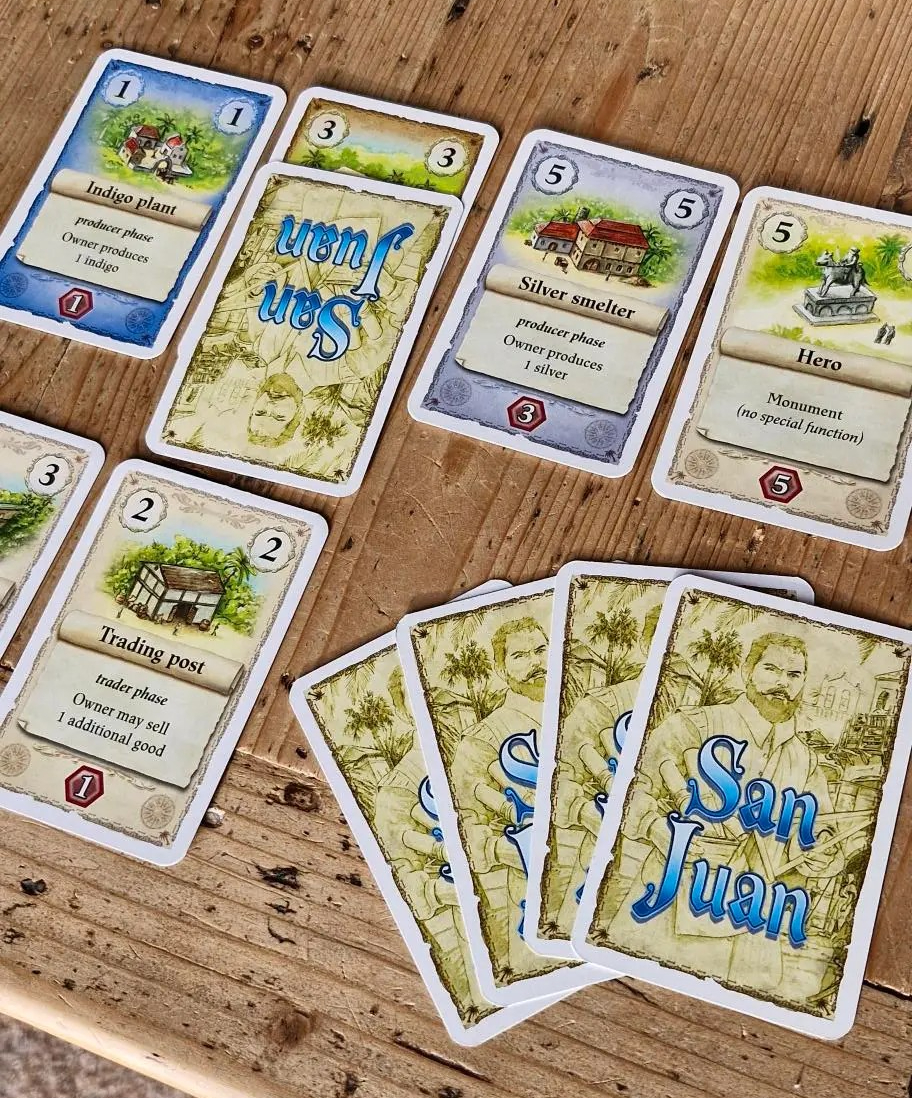
Some things have elements that aren’t terribly inspiring when described but seem to sing when consumed, an example of this is the television series Detectorists. After it being described and quietly recommended by a few people I decided one evening to give it a go. The pacing was steady, the dialogue and humour perfectly enjoyable, the characters had enough depth and soul without trying to dominate the screen and the storylines had just enough bite to keep you coming back. It just worked in such a pleasing way and didn’t try to push too hard in any particular direction and sometimes in the right situation this is just what you need.
So how does this tie into a card game called San Juan? Well there are games that just seem to sit quietly in a gamers arsenal and are really useful to break out in the right situation. San Juan is one of those games, it’s a pleasant treat, it’s immediately pleasing, it’s uncomplicated enough to be accessible to most but also thinky enough to bring the chin stroke out of almost everyone. It has a quick set up and short teach, for the general flow of the game that is and it plays in that 30-40 minute sweet spot. It isn’t however the sort of game that reshapes a genre, much like Detectorists didn’t revolutionise alternative comedy, it just served as satisfying portion to be enjoyed among a familiar genre.
The game itself emerged back in 2004 as a trimmed down card based version of the heavier Puerto Rico, both by designer Andreas Seyfarth. Thematicly players are developing the city of San Juan by playing cards that represent buildings and apparently San Juan in complete when one player has constructed twelve buildings. Played building cards are placed in front of each player in what we refer to in the hobby as a tableau, a fancy term for placing cards on the table in front of you. Placed buildings will score points at the end of the game and as one would expect the player with the most points wins the game.
Apart from a few character and goods value tokens (more on those later) the game is basically a big deck of cards, 110 cards in actual fact. Within these cards are quite a variety of buildings that are essentially split into two types – production and city buildings. Production buildings as the name suggests produce goods which you can then sell, with the city buildings, of which there are around twenty different types, granting you various abilities or bonuses that enhance certain actions or provide extra ways to score points at game end.
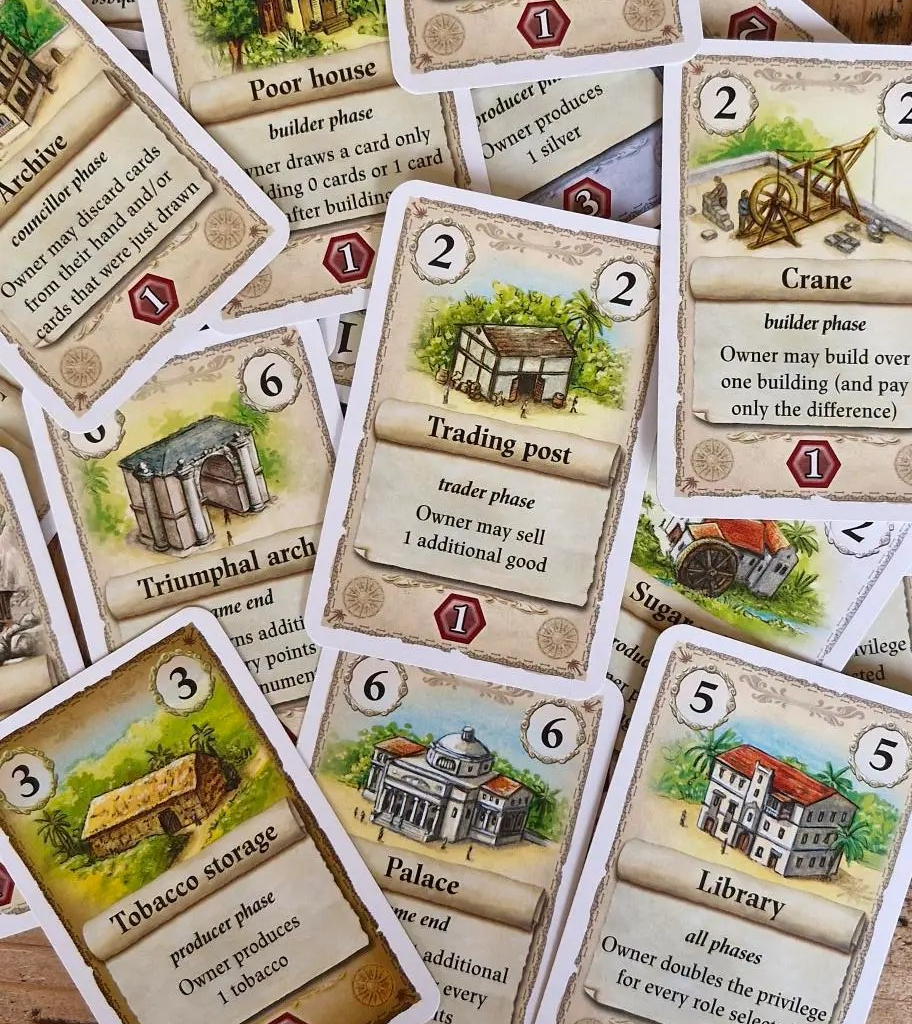
With the tableau aspect of this game there’s no placement restrictions for the buildings you place in front of you, they can go in any order, however that’s not to say that you should just chuck any old buildings down in any order as different buildings will provide abilities that if combined in an effective way will enhance your game and chances of winning. Also some buildings will be best utilised if placed early in proceedings whereas others will be best utilised late on, there’s little point playing a building that boosts your productivity as your last card triggering the game end as you want to be utilising that ability throughout the game. So there’s certainly some consideration as to the point in the game you will want to construct certain buildings.
You might be wondering how the game keeps track of things like produced goods if the game contents are just some character tokens and a load of cards? Well in a similar fashion to other tableau style games like Race for the Galaxy or Port Royale the cards are actually multi purpose. Obviously the standard function is as a building when played in front of a player, however they represent produced goods when placed face down on production buildings and also form the currency of the game. Each building has a construction cost which is simply fulfilled by discarding however many cards from your hand that cost may be, so there’s a big element of hand management here, don’t go discarding cards from your hand that you want to hold onto and actually build later on.
Let’s go back to the character tokens we briefly mentioned earlier by looking at round structure, which revolves around each player in turn choosing one of the displayed characters and carrying out its ability. Then after each person has chosen a role the character tokens are reset and a new round begins with the first player token or Governor token as its known moving around, typical game structure for initiated gamers. Interestingly choosing a particular role doesn’t actually deprive other players from carrying out that action, as each player actually gets to do every chosen role, the benefit of a player choosing a particular role themself is that they get to do a slightly enhanced version of it referred to as the privilege.
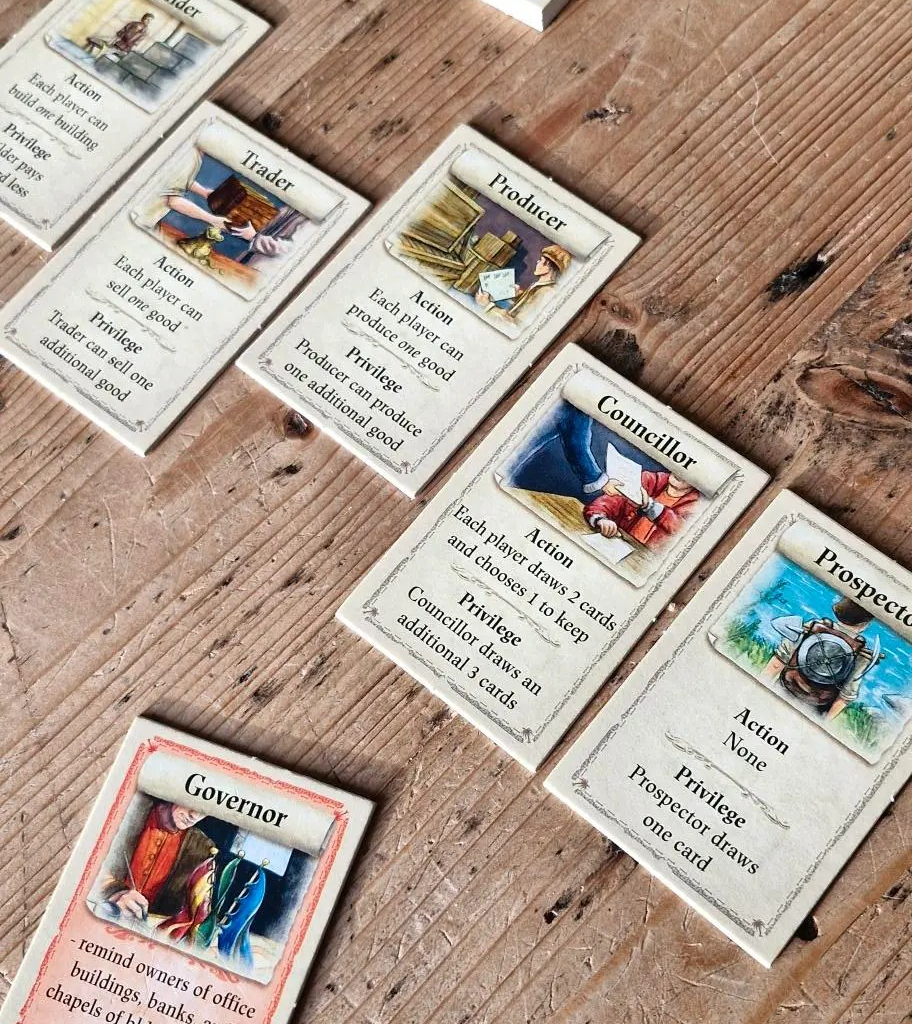
So more about those roles in detail, which aren’t terribly out there or special, they do sort of what you expect in a game of this type. There’s a builder that you guessed it allows you to build, which simply means place a card into your tableau. Then there’s the producer which allows you to produce goods on your production buildings and a trader that then lets you sell those goods. Selling goods in this game simply allows you to draw more cards into your hand, the number being dependant on the value of said goods when sold, which alters throughout the game by circulating through a series of value tokens. Finally the Councillor and Prospector allow players to draw more cards, although the latter only allows the player who chose it to draw, basically it’s the selfish role and anyone who picks it should be told as much!
The lovely thing about these roles being so basic is that players choose them rapidly, there’s no big deliberation over the choice, it’s generally clear what you need to do and this keeps the game flowing. In any given round players will have the opportunity to do pretty much everything, it’s just that certain players will get to do them with a privilege bonus. There might be an argument that this slightly dilutes the experience if the choice is almost made for you and some players could well prefer to have a slightly more chewy decision to make. In which case you would probably be in the realms of Race for the Galaxy, but I really think you’d be picking either of these games for two very different types of game session.
One aspect which might cause not a problem as such but is an issue that card heavy games can encounter, is that first time players will immediately be hit with an array of cards that they aren’t familiar with and will then need to read and understand them as they appear. It’s not really worth trying to go through every variation of card during the teach as players wont remember. Thankfully with San Juan the cards never really have abilities that require much in the way of interpretation or learning and if people feel that they were at a disadvantage not knowing the cards then damn it just play another game of San Juan straight after!
Most collections should have space for a game like San Juan, it serves a purpose for seasoned gamers and new gamers alike, quite a gateway game for the latter offering a simple pleasing system to engage with. If we were going to raise something to consider it could be said that the game perhaps lacks some drama or humour. During our time with the game there hasn’t really been any moments where someone has taken an action that turned a game on its’ head and made people comment on a clever play, or caused a reaction that drew laughter or ‘ooohs’ as someone else has their plans scuppered. It’s all quite safe territory which isn’t meant to make this game sound dull, it’s just something to consider if your group like games with a little edge to them.
That said San Juan certainly gets a thumbs up. Sadly out of print now but there are definitely second hand copies around to be picked up. So maybe you could go on a little hunt to find and unearth this little treasure, a bit like a …. detectorist.
-
Subscribe
Subscribed
Already have a WordPress.com account? Log in now.
 Cardbaudit